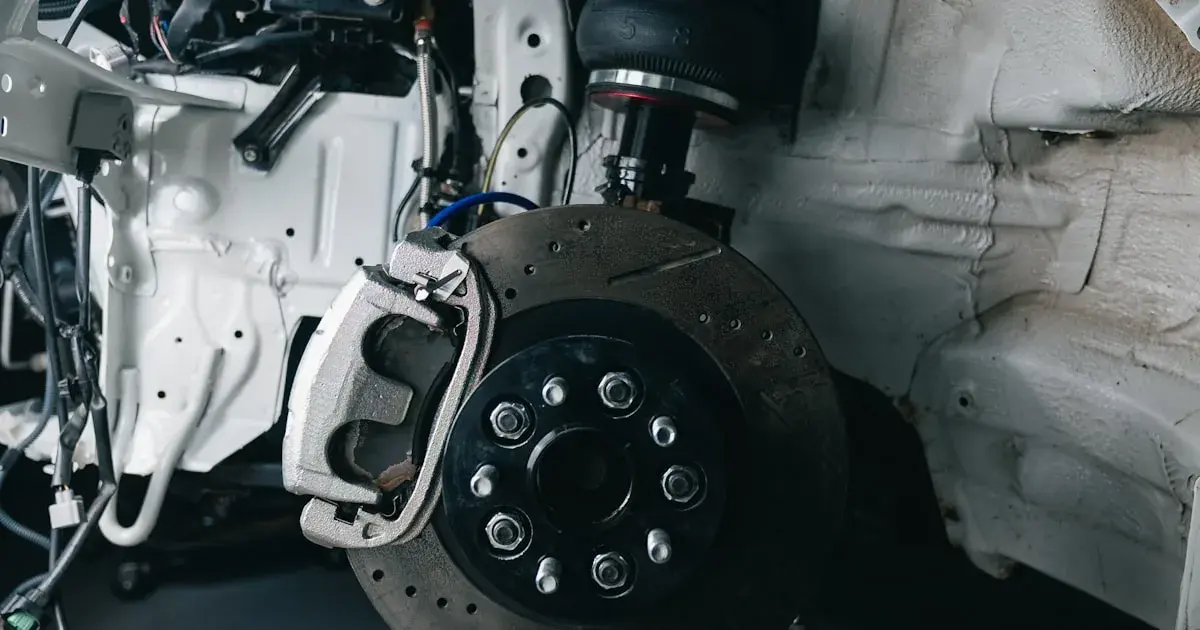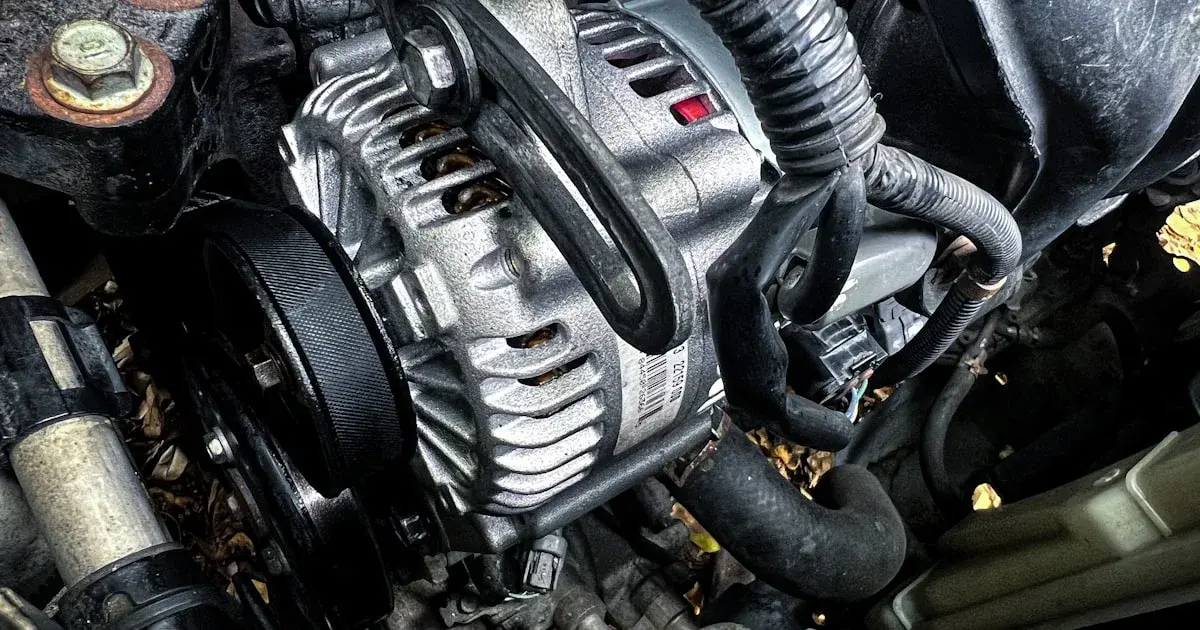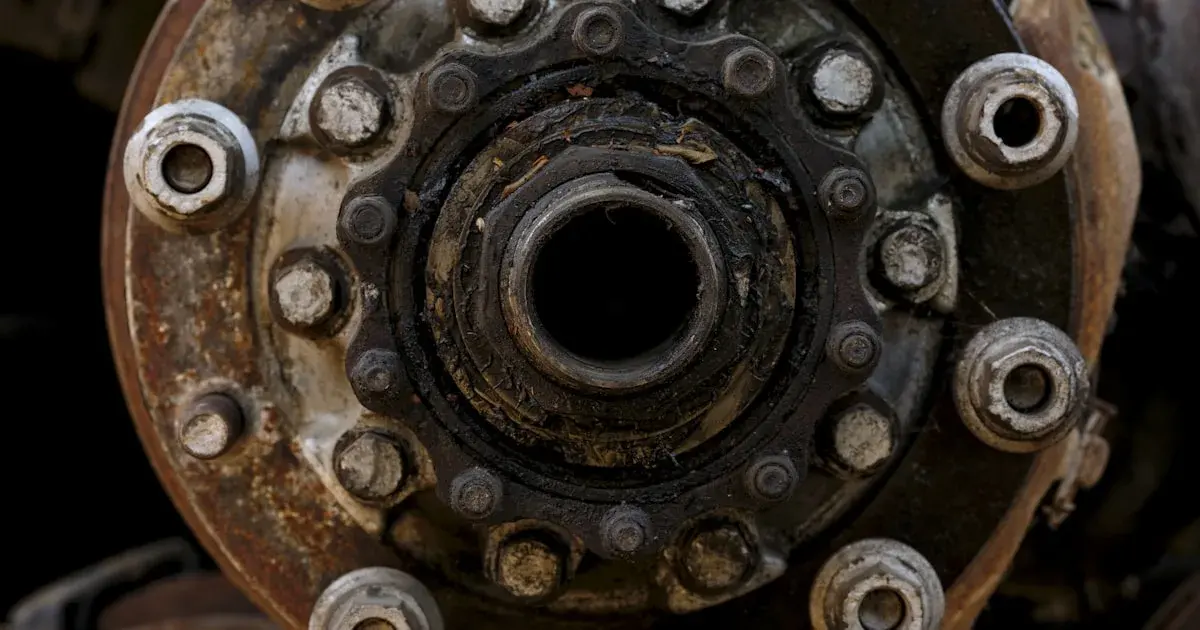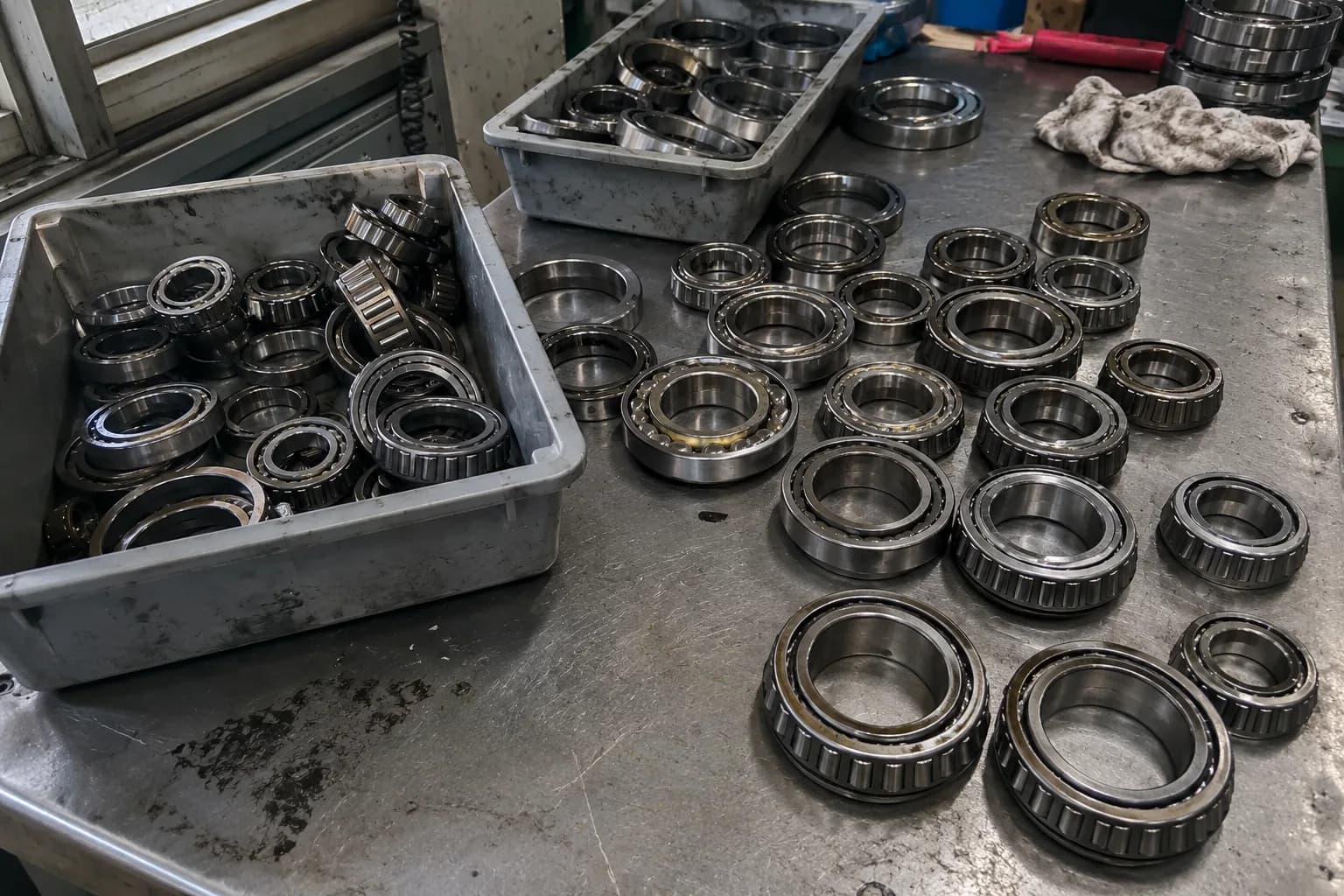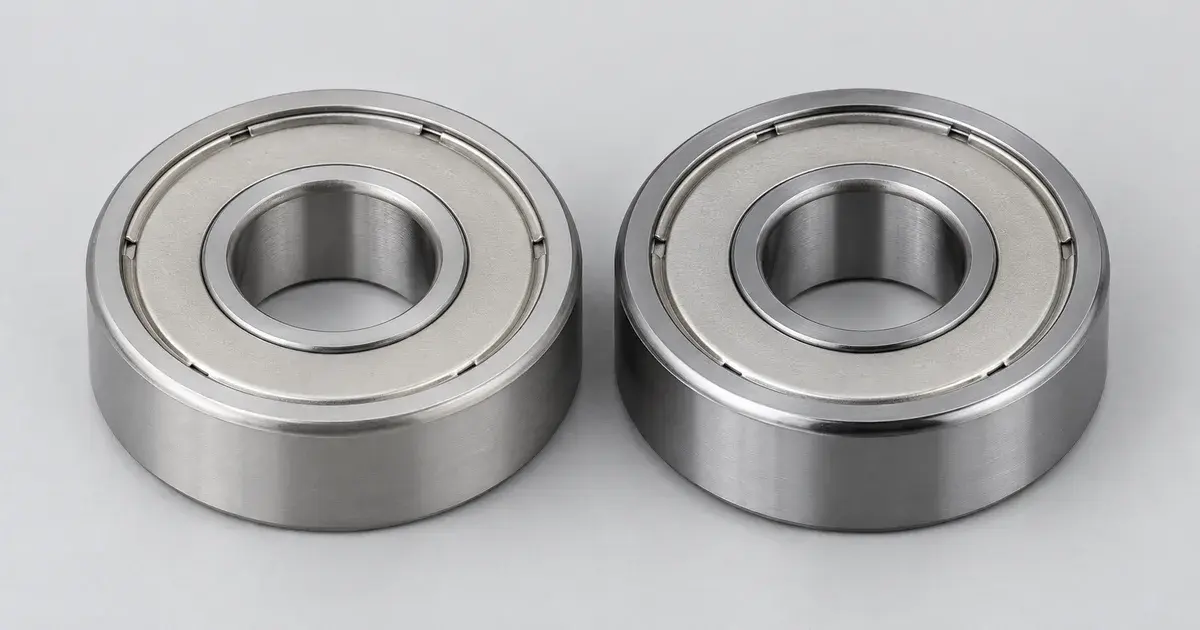
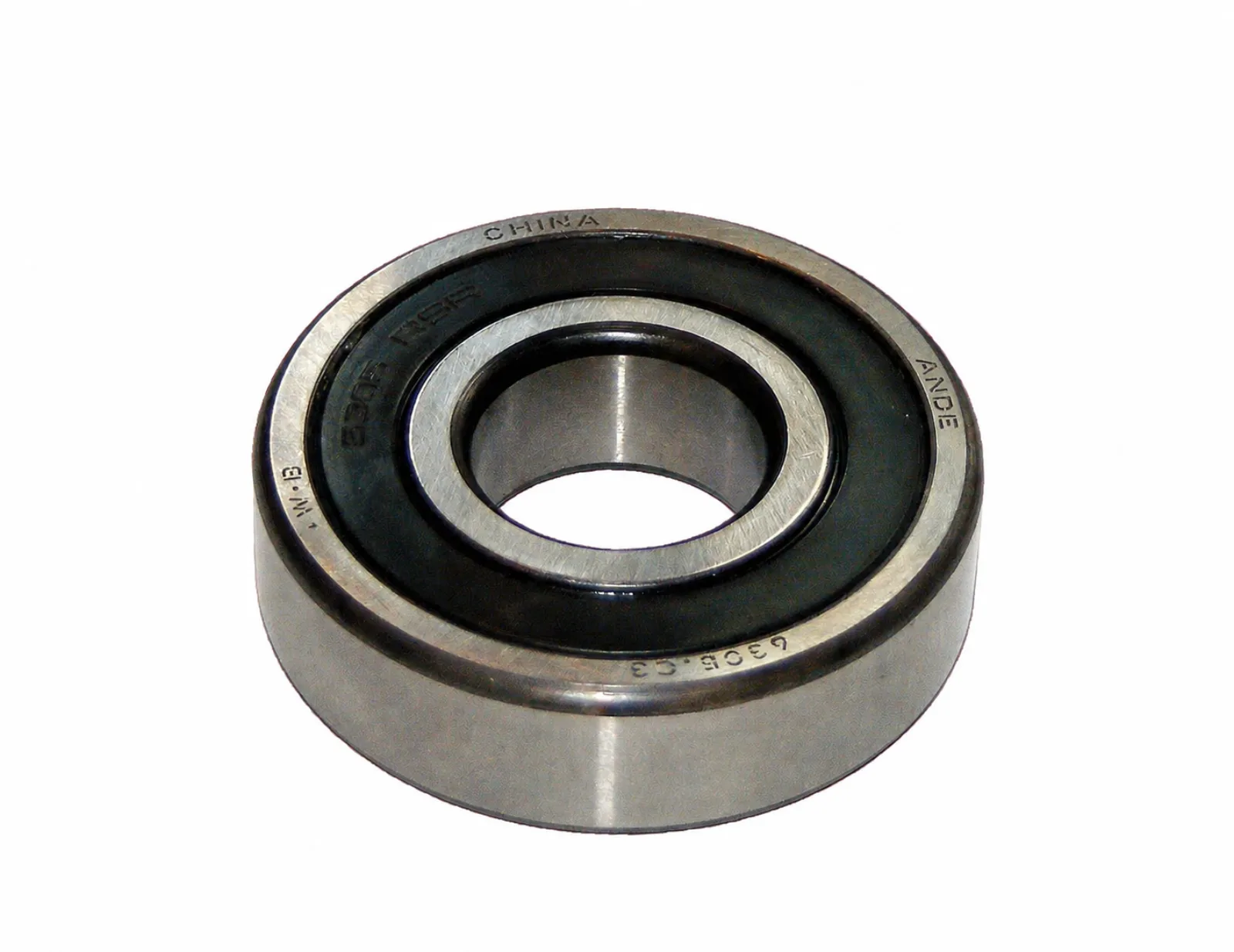
A modern passenger car contains dozens of ball bearings, and a typical battery-electric vehicle (BEV) carries roughly 40 to 60 percent more rolling elements per platform than its internal-combustion equivalent (Mordor Intelligence, Automotive Mounted Bearing Market, 2025; accessed 2026-05). They sit inside wheel hubs, alternators, transmissions, e-axles, traction motors, water pumps, A/C compressors, and steering columns — anywhere a shaft turns.
In 2026, the automotive mounted-bearings segment is projected to grow from USD 1.72 billion in 2025 to USD 2.25 billion by 2030, a 5.54% CAGR, with ball bearings holding a 61.82% share of the category (Mordor Intelligence, Automotive Mounted Bearing Market, 2025; accessed 2026-05). For OEM engineers and aftermarket buyers, that's a lot of money flowing through small components — and a lot of room to choose the wrong part.
This guide focuses on the practical buying decisions: where ball bearings live in a vehicle, the five geometries you'll actually specify, why EVs are forcing a shift to ceramic-hybrid designs, and how to avoid the counterfeit and low-grade traps that have made automotive bearings one of the most-targeted categories in industrial counterfeiting (NSK, The Risks of Buying Counterfeit Bearings, 2020; accessed 2026-05).
Key Takeaways
- The automotive mounted-bearing market reaches USD 2.25B by 2030 at 5.54% CAGR; ball bearings own 61.82% of it (Mordor Intelligence, 2025; accessed 2026-05).
- BEV platforms carry ~40-60% more rolling elements per vehicle than ICE, with ball bearings growing 9.8% CAGR inside the EV bearing segment (Global Market Insights, 2025; accessed 2026-05).
- Five geometries cover ~95% of automotive ball bearing applications: deep groove, angular contact, thrust, self-aligning, and miniature.
- EV traction motors need ceramic-hybrid or current-insulated bearings — variable-frequency drives create shaft currents above 10 kHz that pit conventional steel raceways (SKF Evolution, 2024; accessed 2026-05).
- Always demand IATF 16949 documentation and verify packaging against the OEM. Counterfeit drains $4.2 trillion from the global economy each year (World Bearing Association, 2024; accessed 2026-05).

What Are Automobile Ball Bearings?
Automobile ball bearings are precision rolling-element bearings that use spherical balls — typically chrome steel SAE 52100, AISI 440C stainless, or silicon-nitride ceramic (Si₃N₄) — to carry radial, axial, or combined loads inside a vehicle's rotating assemblies. In 2026, the global rolling-bearings market reached USD 145.19 billion and is forecast to hit USD 329.40 billion by 2034 at 9.53% CAGR, with the automotive sector accounting for nearly a third of revenue (Precedence Research, 2025, accessed 2026-05; Mordor Intelligence, 2026, accessed 2026-05).
A ball bearing's job is simple to describe and hard to engineer: it lets a shaft rotate inside a stationary housing with the lowest possible friction while carrying load, controlling axial position, and surviving the heat, vibration, and contamination that real cars throw at it. Get any of those wrong and the symptom is the same — noise, then heat, then a stranded vehicle. For the underlying mechanics, our pillar guide on the different kinds of bearings walks through how rolling-element and plain bearings differ at the contact patch.
What we see on returned bearings: the failure mode logged on the warranty form is rarely the root cause. About 80% of "fatigue" warranty claims we examine on returned automotive ball bearings turn out to be contamination, lubrication starvation, or installation damage — confirming the SKF general-cataloguing breakdown that fatigue is a relatively small share of real-world bearing deaths.
Where Do Ball Bearings Live in a Modern Car?
A modern internal-combustion passenger car typically contains 30 to 50 ball bearings, and BEVs add an additional 40 to 60 percent on top of that through e-axle, traction motor, and electric-compressor assemblies (Mordor Intelligence, 2025; accessed 2026-05). The map below shows where they cluster.
Wheel hubs and driveline
Wheel hub assemblies use Generation 1, 2, or 3 bearing units — most modern passenger cars now use Gen-3 sealed hub units that integrate the bearing, ABS sensor, and mounting flange. Driveshaft and CV joint assemblies use additional support bearings. According to Schaeffler's L10h reference table, a passenger-car wheel bearing's design life sits between 1,400 and 7,000 operating hours depending on duty cycle (Schaeffler medias, 2026; accessed 2026-05), which translates to roughly 100,000 miles in real-world service for a sealed unit (Counterman Magazine, 2024; accessed 2026-05).
Engine accessories
Alternators, water pumps, idler pulleys, belt tensioners, A/C compressor clutches, and starter motors all run on small deep-groove ball bearings — typically 6201 to 6303 series in the 12 to 17 mm bore range. These bearings see vibration, thermal cycling, and salt spray, which is why aftermarket parts almost always come sealed (2RS) rather than shielded (ZZ).

Transmission, steering, and clutch
Manual and automatic transmissions use a mix of deep-groove ball bearings (input/output shaft support), tapered roller bearings (carrier and pinion), and thrust ball bearings (release/clutch throw-out). For why heavier driveline components shift away from ball geometry entirely, see our companion guide on tapered vs cylindrical roller bearings.
EV-specific: e-axle, traction motor, e-compressor
This is where automotive bearing design changed in the last five years. EV traction motors routinely operate above 15,000 rpm and are driven by inverters whose pulse-width-modulated output induces parasitic shaft currents above 10 kHz (SKF Evolution, 2024; accessed 2026-05). The 17 million electric cars sold globally in 2024, more than 20% of all new cars, have made this a mainstream requirement, not a niche specification (IEA, Global EV Outlook 2025, 2025; accessed 2026-05).

What Are the Five Types of Ball Bearings Used in Automobiles?
Five geometries cover almost every automotive ball-bearing application. Deep-groove takes the lion's share, but the others fill specific roles where deep-groove can't carry the axial load, can't tolerate misalignment, or can't fit the package. The table below is the buyer's-eye view: load direction, speed envelope, and the typical car system you'll find each in.
| Type | Load direction | Speed envelope | Misalignment | Where it lives in a car |
|---|---|---|---|---|
| Deep groove | Radial + moderate axial | Very high | Low (~0.001 rad) | Alternator, water pump, gearbox shaft, AC clutch |
| Angular contact | Combined radial + axial | High | Low | Wheel hub units, machine spindles, EV traction motor |
| Thrust | Pure axial | Moderate | None | Steering column, clutch release, automatic transmission |
| Self-aligning | Radial + light axial | Moderate | High (up to 3°) | Long auxiliary shafts, agricultural / off-road vehicle accessories |
| Miniature | Radial + light axial | Very high | Low | Cooling fans, turbochargers in some designs, sensor assemblies |
A few practical notes that catalog tables tend to skip. Deep-groove is your default — if the load and speed allow it, you'll save cost and gain availability. Angular-contact bearings are almost always installed in matched pairs (back-to-back, face-to-face, or tandem) so axial load can be carried in both directions and preload is controlled. Thrust ball bearings are pure-axial only; mounting them on a shaft that sees any meaningful radial load is one of the more common selection errors we see on returned product. For the full geometric breakdown, see our different kinds of bearings pillar and the related explainer on dynamic vs static load ratings.
According to Mordor Intelligence, ball bearings hold 61.82% of the automotive mounted-bearing segment, with original-equipment supply taking 73.63% of revenue and the aftermarket growing at 6.73% CAGR through 2030 (Mordor Intelligence, 2025; accessed 2026-05). For a buyer, that mix matters: OEM-grade demands tighter quality systems, while aftermarket lots offer faster turnover but more counterfeit risk. We cover both worlds in how to source Chinese bearings overseas.
Why Do EVs Need Ceramic Hybrid Ball Bearings?
EV traction motors create a new failure mode that traditional automotive bearings weren't designed for: electric discharge machining (EDM) damage from inverter-induced shaft currents. SKF lab studies replicate the failure at frequencies of 12.5 kHz and document micro-pitting, frosting, and fluting on the raceway — symptoms that progress to NVH (noise/vibration/harshness) complaints and premature failure (SKF Evolution, peer-reviewed in Tribology International, 2024; accessed 2026-05). Ceramic-hybrid designs (silicon nitride balls, steel rings) break the electrical circuit because Si₃N₄ is a near-perfect insulator.
The numbers behind the shift are striking. The EV bearings market is forecast to grow from USD 2.64 billion in 2024 to USD 5.44 billion by 2034 at 8.7% CAGR, with ball bearings holding ~62% segment share and growing slightly faster at 9.8% CAGR — meaning the ball-bearing share is increasing as the segment matures (Global Market Insights, 2025; accessed 2026-05).
Schaeffler's hybrid line (the "HC" prefix in their catalog) advertises up to 20% higher rotational speeds, lower operating temperatures, and electrical insulation that prevents both EDM pitting and the white-etching cracks (WEC) that plague high-power steel bearings (Schaeffler medias, 2026; accessed 2026-05). SKF's data is consistent: ceramic balls give DC resistance in the gigaohm range and grease life more than four times longer than all-steel bearings at very high speeds (SKF Evolution, accessed 2026-05).
The takeaway for buyers: if your application is an EV traction motor, e-axle, or high-frequency e-compressor, and you're being quoted a generic chrome-steel deep-groove bearing as a drop-in replacement, walk away. You also have non-ceramic options — SKF's INSOCOAT (an oxide ceramic coating on the outer ring) and current-insulated bearings from FAG/Schaeffler do the same job with different trade-offs.
How Do I Buy Automobile Ball Bearings? A 7-Step Buyer's Checklist
Selection comes down to seven questions, asked in order. Skip any one and you'll discover the consequence in the warranty data, not the lab. The order matters: load before speed, speed before environment, environment before precision, precision before seal, seal before certification, certification before supplier.
- What's the load type and direction? Predominantly radial means deep-groove. Combined radial-plus-axial means angular-contact (in matched pairs). Pure axial means thrust. If the shaft has any meaningful misalignment, self-aligning ball or spherical roller. The basic dynamic load rating C and basic static load rating C₀ on the manufacturer datasheet drive the L10 life calculation per ISO 281 (ISO 281:2007, confirmed 2021; accessed 2026-05).
- What's the speed? Check the bore-speed product (DN value: bore diameter in mm × rpm) against the manufacturer's grease or oil limit. Conventional grease lubrication is good to about 500,000 mm·rpm; specialty greases and ceramic hybrids stretch that to 2,000,000 mm·rpm and beyond (Machinery Lubrication, 2010; accessed 2026-05).
- What's the operating environment? Wheel-hub assemblies face salt spray, water ingress, and brake-dust contamination — non-negotiable on sealed (2RS) hub units. Engine-bay bearings see 100°C+ ambient with thermal cycling. EV traction motors add inverter-induced shaft currents to the list. Match material (52100, 440C, ceramic) and seal type to the worst-case environment, not the average.
- What's the precision class? Most automotive applications use ABEC-1 (ISO P0) or ABEC-3 (P6). Wheel bearings and high-speed accessories specify ABEC-5 (P5) or higher. Be skeptical of suppliers quoting ABEC-7+ for general automotive applications — at that point you're paying for tolerance you can't use, and it's a common up-sell trap.
- What's the seal arrangement? Sealed (2RS, contact rubber lip) units are pre-greased and maintenance-free. Shielded (ZZ, metal non-contact shield) units run cooler at high speed but admit moisture and dust. Open bearings are for clean re-lubricated assemblies. Wheel hubs are always sealed. Alternators and water pumps are typically sealed. Cooling fans can be either.
- Do you have IATF 16949 documentation? IATF 16949:2016 (accessed 2026-05) is the de facto quality management standard for the automotive supply chain. If a supplier can't produce a current IATF certificate plus the bearing's PPAP package on request, you're either buying for a non-OEM application or you're buying a quality risk you can't audit.
- Who's the supplier, really? A trader, a stocking distributor, and a manufacturer all sell the same SKU at three different prices and three different risk levels. Ask for the factory name, location, and IATF audit history. For more on this, see how to source Chinese bearings overseas.
When in doubt, run the L10 life calculation per ISO 281 against the manufacturer's basic dynamic load rating (C). It's common practice to oversize C by 20-30% to extend service life beyond the design minimum — and to absorb the variance you can't measure on a quote sheet.
How Do You Spot a Counterfeit Automotive Ball Bearing?
Counterfeiting drains roughly USD 4.2 trillion from the global economy every year, puts 5.4 million jobs at risk, and the World Bearing Association estimates 39% of fake products "pose danger to lives" (World Bearing Association, 2024; accessed 2026-05). NSK's industry white paper is blunter: counterfeit packaging now copies logos, serial numbers, and UPC codes at a level that's invisible at a glance, and "a life difference of up to 20 times is not uncommon" between a genuine premium-steel bearing and the fake that replaces it (NSK, The Risks of Buying Counterfeit Bearings, 2020; accessed 2026-05).

The historical context is sobering: between 2007 and 2012, Schaeffler alone seized and destroyed 66 metric tons of fake rolling bearings worth roughly EUR 9 million, and Chinese customs seized over 2.2 million counterfeit bearings destined for 50 countries between 2009 and 2011 (GlobalSpec/Engineering360, 2015; accessed 2026-05). Volumes have not declined since.
The practical red flags that catch most fakes:
- Pricing too good. Premium-brand bearings have known street prices. A "genuine SKF 6204-2RS" sold at 30% under list is almost certainly counterfeit or grey-market.
- Packaging detail mismatches. Off-tone print colors, misaligned barcodes, missing batch codes, stickers placed over the original logo. The OEM's anti-counterfeit page (most have one) shows the current packaging signatures.
- Loose tolerance and ring runout. A genuine bearing rotates with audible smoothness even by hand. Fakes often feel gritty or have visible inner-ring runout.
- Missing or fake documentation. No IATF 16949 certificate, no material test report, no PPAP. Or, just as suspicious, certificates that are too perfect — same scan repeated across SKUs.
- Wrong markings. Genuine bearings carry consistent laser-etched markings on inner ring, outer ring, and cage. Fakes often skip the cage marking or use stamped (not etched) numbers.
For buyers sourcing from China specifically, our supplier-vetting playbook in how to source Chinese bearings overseas goes deeper into factory audits, third-party inspection (SGS/BV), and the legitimate Chinese manufacturers (including ANDE Bearing) that maintain IATF certification and transparent supply chains.
How Long Should an Automobile Ball Bearing Last?
A properly selected and lubricated ball bearing in a passenger car typically delivers 100,000 miles of service life on a sealed wheel hub unit, while non-sealed (serviceable) wheel bearings need maintenance every 25,000 to 30,000 miles (Counterman Magazine, 2023; accessed 2026-05). That's the consumer-facing number. The engineering view from Schaeffler's L10h reference table is more granular.
Real-world wheel-bearing failure shows up as humming or growling noise that worsens with speed, then heat, then play in the hub. NHTSA recall 24V-794 in October 2024 covered 2025 Ram 1500 vehicles for damaged front wheel bearing hub assemblies — a reminder that even tier-1 OEM bearings can ship with batch-level defects, and that aftermarket buyers have an obligation to track recall data (NHTSA, Part 573 Safety Recall Report 24V-794, October 2024; accessed 2026-05).
For diagnostic context, our guide on how to measure a bearing covers the dimensional checks worth doing before reordering, and the dynamic vs static load primer explains why a "right-sized" replacement isn't always one rated like-for-like.
Frequently Asked Questions
Q: How many ball bearings does a typical car have?
A modern internal-combustion passenger car typically carries 30 to 50 ball bearings across wheel hubs, transmission, engine accessories, steering, and clutch. BEVs add roughly 40 to 60 percent more rolling elements per platform through e-axle, traction-motor, and electric-compressor assemblies (Mordor Intelligence, 2025; accessed 2026-05). Counts vary widely with platform and option content.
Q: What is the difference between OEM and aftermarket automotive ball bearings?
OEM bearings are produced under the vehicle manufacturer's PPAP (Production Part Approval Process) with full IATF 16949 documentation and tight batch traceability. Aftermarket bearings range from genuine OEM-equivalent (same factory, different label) down to no-name imports of variable quality. OEM holds 73.63% of automotive bearing revenue while aftermarket grows at 6.73% CAGR through 2030 (Mordor Intelligence, 2025; accessed 2026-05).
Q: Are ceramic hybrid bearings worth it for a regular car?
For ICE passenger vehicles, no — chrome-steel deep-groove bearings carry the load-speed envelope at a fraction of the cost. Ceramic hybrids (silicon nitride balls in steel rings) earn their cost premium specifically in EV traction motors, e-axles, and high-speed accessories where their electrical insulation prevents EDM raceway pitting from inverter-induced shaft currents (SKF Evolution, 2024; accessed 2026-05).
Q: How do I know if a wheel bearing is going bad?
The classic early sign is a humming or growling noise that grows louder with vehicle speed and changes pitch in turns (loaded vs unloaded side). As the bearing degrades, you'll feel play at the hub, pulling under braking, and eventually heat. Sealed wheel hub units typically last around 100,000 miles in normal duty before symptoms appear, though contaminated water crossings, severe potholes, and heavy load can cut that significantly (Counterman Magazine, 2023; accessed 2026-05).
Q: What does ABEC mean for car bearings?
ABEC (per ABMA Std 12.1) measures dimensional and rotational tolerances only — not load capacity, surface finish, or noise. Standard automotive applications use ABEC-1 (ISO P0) or ABEC-3 (P6); precision wheel bearings and high-speed accessories specify ABEC-5 or higher. A high ABEC rating is meaningful for spindle-grade applications but isn't a quality marker for general use, where internal geometry and lubrication matter more.
Q: Why are counterfeit automotive ball bearings such a problem?
Automotive aftermarket is one of the most-targeted segments for bearing counterfeiting because volumes are large, brand recognition is high, and the visible quality difference is small. NSK reports a life difference of up to 20× between genuine premium-steel and counterfeit bearings (NSK, 2020; accessed 2026-05). Always demand IATF 16949 documentation, verify packaging against OEM signatures, and source from manufacturers or audited distributors only.
Buy the Right Bearing the First Time
Specifying automobile ball bearings comes down to four variables: load direction, speed, environment, and precision class — in that order. Buying them is a fifth question on top: who's making them, and can they prove it. The companies that do well in 2026 (OEM and aftermarket alike) are the ones treating IATF 16949 documentation, batch traceability, and counterfeit prevention as core procurement disciplines rather than paperwork.
Ready to source automotive ball bearings from a manufacturer with IATF 16949 certification and full PPAP traceability? Browse the ANDE Bearing ball bearing range — including deep-groove, angular-contact, and self-aligning ball bearing lines — explore the full product catalog, or contact our engineering team for application-specific consultation.
About the Author
Jeff Li writes on bearing engineering and global sourcing for ANDE Bearing. He works directly with OEM and aftermarket buyers in automotive, heavy industry, and renewable energy. Connect on LinkedIn.