
Roller Bearings
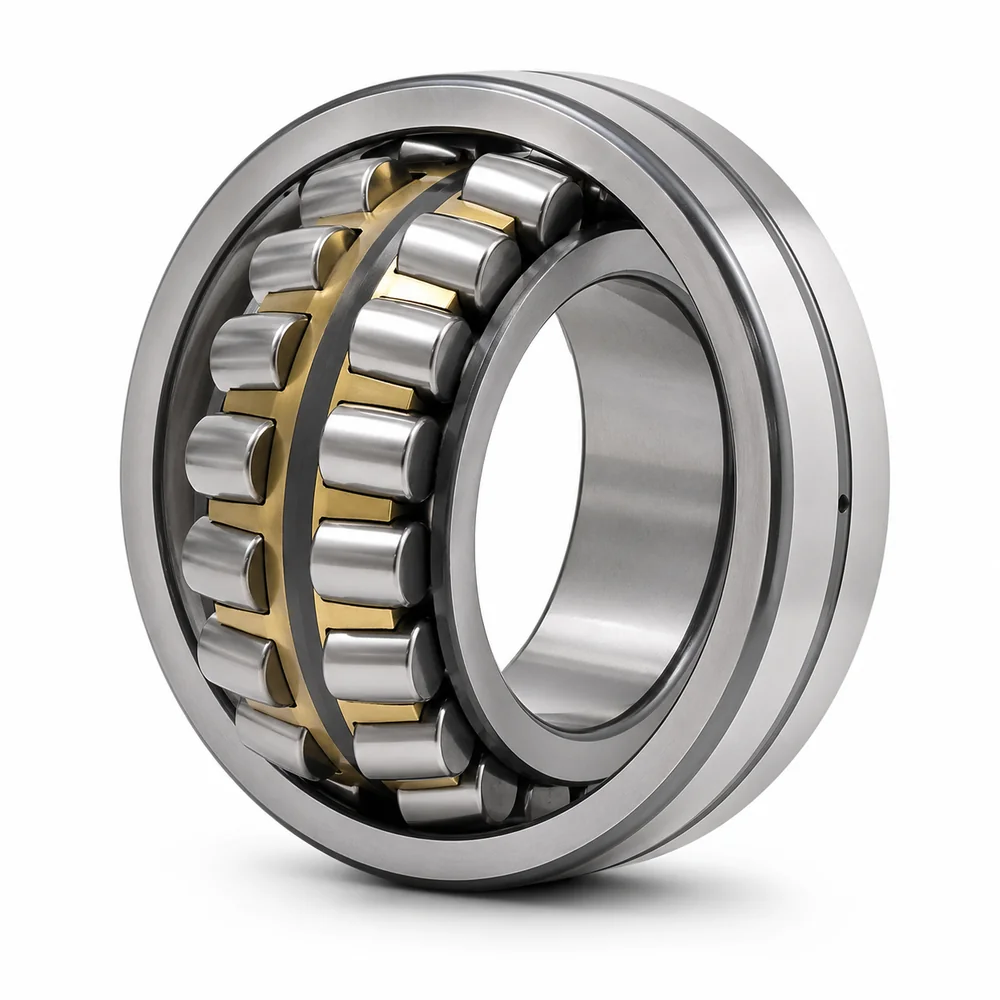
Spherical Roller Bearing
Self-aligning double-row bearings with barrel-shaped rollers for heavy radial loads, shock resistance, and up to 2° misalignment compensation in mining, steel, and energy applications.
Technical Overview
Spherical Roller Bearings feature two rows of barrel-shaped rollers running on a common spherical outer ring raceway, giving them a unique self-aligning capability that accommodates angular misalignment up to 2 degrees, shaft deflection, and housing distortion. This makes them the go-to bearing for heavy-duty applications where perfect shaft-to-housing alignment is difficult to achieve or maintain — such as mining crushers, steel mill continuous casters, paper machines, and wind turbine drivetrains. ANDE spherical roller bearings are manufactured from high-carbon chrome steel with optimized roller geometry and surface finish to maximize load capacity while minimizing friction and heat generation. Available in open, sealed, and shielded configurations with bore diameters from 20 mm to 400 mm, they cover a wide range of industrial applications where reliability under harsh conditions is non-negotiable.
Key Features
Technical Specifications
Applications
Designation & Suffix Decoder
Spherical roller bearing part numbers follow DIN 623-1: a series prefix (213, 222, 223, 230, 231, 232, 240, 241, etc.) plus a size code, followed by suffix letters that describe the cage, clearance, tolerance, sealing and bore type. The most common suffixes are below.
| Suffix | Meaning |
|---|---|
| K | Tapered bore, 1:12 taper |
| K30 | Tapered bore, 1:30 taper |
| E / E1 | Reinforced/optimised internal design |
| CC / CCK | Two pressed-steel window cages, optimised internal geometry |
| MA / MA1 / MB | Machined brass cage |
| CA / CAC | Machined brass cage with optimised pocket geometry |
| W33 | Lubrication groove + 3 holes in outer ring |
| 2RS / 2CS | Contact lip seals on both sides |
| C2 / CN / C3 / C4 / C5 | Radial internal clearance class |
| P0 / P6 / P5 / P4 | Tolerance/precision class per ISO 492 |
| T41A / T41D | Vibratory machinery specification |
| S0 / S1 / S2 | Heat-stabilised |
Internal Clearance Classes (ISO 5753)
Radial internal clearance is the total radial movement between rings before the rollers are loaded. The right class depends on the fit, the operating temperature and whether you are mounting with an adapter sleeve. Selecting too tight a class on a tapered-bore drive-up is the single most common cause of early heat-related failure in field installations.
| Class | Description |
|---|---|
| C2 | Smaller than normal |
| CN (Normal) | Normal clearance |
| C3 | Larger than CN |
| C4 | Larger than C3 |
| C5 | Larger than C4 |
Permissible Misalignment by Series
Spherical roller bearings can compensate angular misalignment between shaft and housing because of their spherical outer raceway. The exact permissible adjustment angle depends on the bearing series and on whether the bearing is open or sealed.
Values apply for static misalignment with rotating inner ring under load P ≤ 0.1·Cr. If the outer ring is the rotating component, or if the inner ring undergoes tumbling motion, the permissible angle is smaller — please contact engineering.
Common Failure Modes & Diagnostics
ISO 15243 classifies spherical roller bearing damage into six families. The five below cover the great majority of field failures we see on heavy-industry installations.
Edge loading (misalignment beyond limit)
Symptoms
Heat and wear concentrated on one side of the raceway; localised smearing; early spalling at one roller end.
Likely cause
Static or operating misalignment exceeding the permissible adjustment angle for the series; distorted or compliant housing; foundation deflection.
Fix
Restore alignment, stiffen the bearing housing or upgrade to a series with a higher permissible angle (223/231/232/241). For sealed bearings keep alignment under 0.5°.
Lost clearance after sleeve drive-up
Symptoms
Temperature rise within minutes of start-up, increased running torque, low-frequency growl, premature smearing in the load zone.
Likely cause
Adapter sleeve driven up too far, removing too much radial clearance; or correct drive-up but wrong starting clearance class for the operating temperature.
Fix
Re-mount to the catalog clearance reduction; record cold and hot clearance; for hot or vibratory service step up from CN to C3 or C3 to C4.
Smearing / scuffing under shock or thin film
Symptoms
Grey patches with metal transfer between rollers and raceway; sudden temperature spikes; cage discolouration.
Likely cause
Insufficient lubricant viscosity at operating temperature; starvation; severe shock during start-up under no load.
Fix
Increase base oil viscosity or switch to circulating oil; ensure the oil bath wets the lowest roller; pre-load before start-up; for vibratory service specify T41A / T41D.
Contamination & abrasive wear
Symptoms
Gritty rotation, debris in grease or oil filter, dull raceway finish, accelerated roller-end wear.
Likely cause
Ineffective or worn seals, missing labyrinth seal, or unfiltered relubrication grease.
Fix
Specify 2RS / 2VS sealed variants for contaminated environments; add external deflectors; filter grease through 25 µm; tighten relubrication intervals.
Electrical erosion (fluting)
Symptoms
Wave-like grooves perpendicular to the raceway; rapid grease darkening; intermittent noise that grows steadily.
Likely cause
Stray currents from VFD-driven motors with poor shaft grounding; insulation breakdown.
Fix
Install shaft-grounding rings or insulated bearings on the non-drive end; review VFD output filter and grounding strategy. Coatings alone do not solve active discharge.
L10 Life Calculation — Worked Example
The basic dynamic rating life L10 follows ISO 281: L10 = (Cr / P)^p in millions of revolutions, where p = 10/3 for roller bearings. For combined load you first reduce Fr and Fa into an equivalent dynamic load P. Below is a worked example for a 22216 E in a paper-machine dryer-cylinder position.
Given
22216 E · Cr = 326 kN · n = 600 r/min · Fr = 40 kN radial · Fa ≈ 0 (pure radial) · so P = Fr = 40 kN
- 1
Equivalent dynamic load P
P = Fr (axial load is negligible, Fa/Fr ≤ e)
P = 40 kN
- 2
Basic rating life L10 (millions of revolutions)
L10 = (Cr / P)^(10/3) = (326 / 40)^3.333
L10 ≈ 8.15^3.333 ≈ 1 090 million revolutions
- 3
Service life L10h (hours)
L10h = L10 × 1 000 000 / (60 × n)
L10h = 1 090 × 10^6 / (60 × 600) ≈ 30 300 hours
Basic rating life ≈ 30 300 hours at 90% reliability. With a_ISO ≈ 1.5 for clean grease and good lubrication, modified rating life Lnmr ≈ 45 000 hours.
Worked example for illustration only. Real selection requires verifying X, Y and e factors at the calculated Fa/Fr ratio and applying a_ISO with the contamination factor ec. ANDE engineering can run the full ISO 281 / ISO 16281 analysis for a specific application on request.
Frequently Asked Questions
Q1How much misalignment can a spherical roller bearing handle?
ANDE spherical roller bearings accommodate up to 2 degrees of angular misalignment between the shaft and housing while maintaining full load capacity. This self-aligning capability is inherent in the spherical outer ring raceway geometry and requires no additional components.
Q2What causes spherical roller bearing failure in heavy industry?
The most common failure modes are: surface fatigue (spalling) from overloading or insufficient lubrication, brinelling from shock loads during transport or installation, contamination ingress from inadequate sealing in dusty environments, and thermal damage from insufficient cooling in high-temperature applications like continuous casters.
Q3How do I choose between sealed and open spherical roller bearings?
Sealed spherical roller bearings (suffix 2CS5 or E2) are pre-greased and maintenance-free for moderately contaminated environments. Open bearings with oil lubrication are preferred for high-temperature applications (above 100°C), very high speeds, or where oil mist lubrication systems are already in place. Sealed variants have approximately 20% lower speed limits.
Q4What is the temperature limit for spherical roller bearings?
Standard spherical roller bearings operate up to +150°C continuous. For higher temperatures, heat-stabilised variants are available: S1 suffix for up to +200°C and S2 for up to +250°C. These versions use special heat treatment to maintain dimensional stability, with adjusted internal clearance (C3 or C4) to compensate for thermal expansion.
Q5Can spherical roller bearings handle axial loads?
Yes. Spherical roller bearings can handle moderate axial loads up to approximately 55% of the unused radial capacity (standard designs) or 100% of radial capacity (E-type reinforced designs with asymmetric rollers). For heavy combined loads, ensure proper preload and use the appropriate internal clearance group.
Q6What does the K suffix mean on a spherical roller bearing?
The K suffix indicates a tapered bore with a 1:12 taper ratio (e.g., 22216 K). It allows the bearing to be mounted on a tapered shaft directly, or on a parallel shaft using an adapter sleeve (H-series) or withdrawal sleeve. The K30 suffix indicates a 1:30 taper, used on series 240, 241 and 249 bearings with larger bore diameters.
Q7Are ANDE spherical roller bearings interchangeable with SKF, FAG or NSK?
Yes. ANDE spherical roller bearings follow ISO 15:2017 boundary dimensions, so a 22216 from ANDE has the same bore, outer diameter and width as a 22216 from SKF, FAG, NSK or any other ISO-compliant manufacturer. Internal designations (cage, clearance, suffix codes) are also aligned with the ISO/DIN convention. For each replacement project we recommend confirming the exact suffix combination and load profile against the original drawing.
Spherical Roller Bearing Size Chart
Boundary dimensions per ISO 15:2017 across light (213), normal (222), heavy (223), low-section (230), heavy (231/232) and extra-wide (240/241) series. Tapered-bore variants (K, K30) share the same boundary dimensions; suffix combinations (E, MA, MB, CA, CC, W33, 2RS, C2/C3/C4) are documented in the designation guide above and confirmed at quotation.
| Bearing No. | Bore (d) mm | Outer (D) mm | Width (B) mm |
|---|---|---|---|
| 21306 | 30 | 72 | 19 |
| 21307 | 35 | 80 | 21 |
| 21308 | 40 | 90 | 23 |
| 21309 | 45 | 100 | 25 |
| 21310 | 50 | 110 | 27 |
| 21311 | 55 | 120 | 29 |
| 21312 | 60 | 130 | 31 |
| 21314 | 70 | 150 | 35 |
| 21316 | 80 | 170 | 39 |
| 21318 | 90 | 190 | 43 |
| 21320 | 100 | 215 | 47 |
| 22205 | 25 | 52 | 18 |
| 22206 | 30 | 62 | 20 |
| 22207 | 35 | 72 | 23 |
| 22208 | 40 | 80 | 23 |
Can't find what you need? We can source non-standard and custom bearings.
Related Products
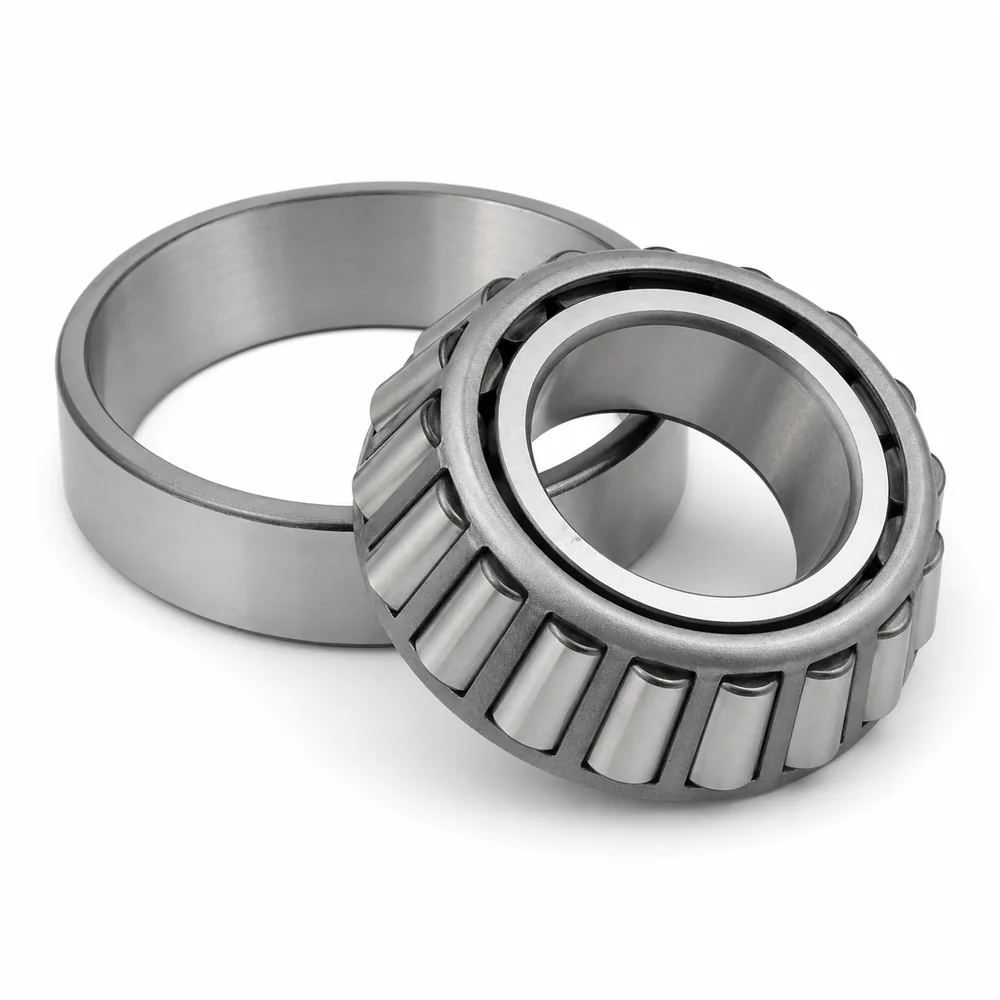
Tapered Roller Bearing
Designed to handle combined radial and axial loads with tapered raceways for heavy-duty applications.
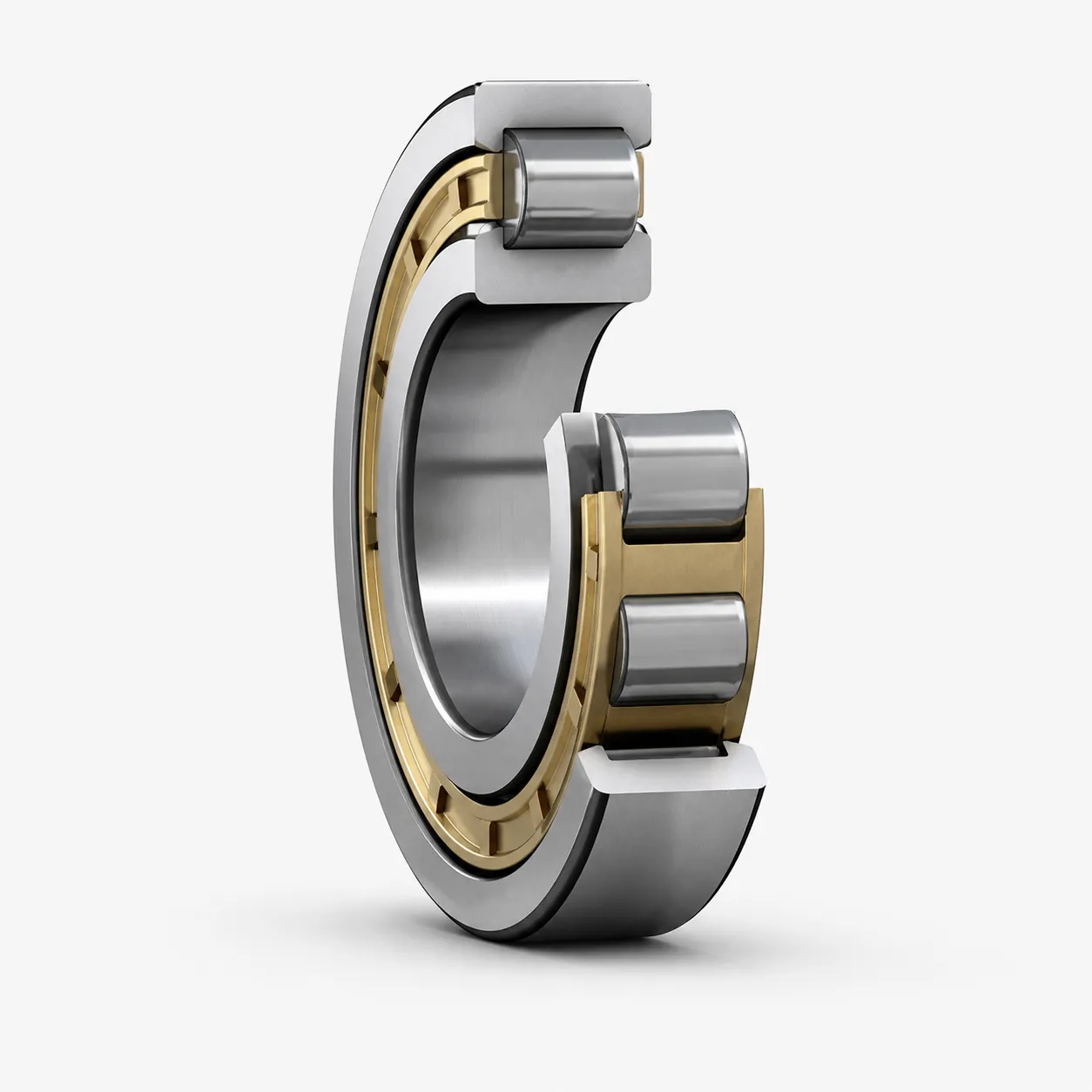
Cylindrical Roller Bearing
High radial load capacity bearings using line contact between rollers and raceways for optimised stress distribution in industrial machinery.
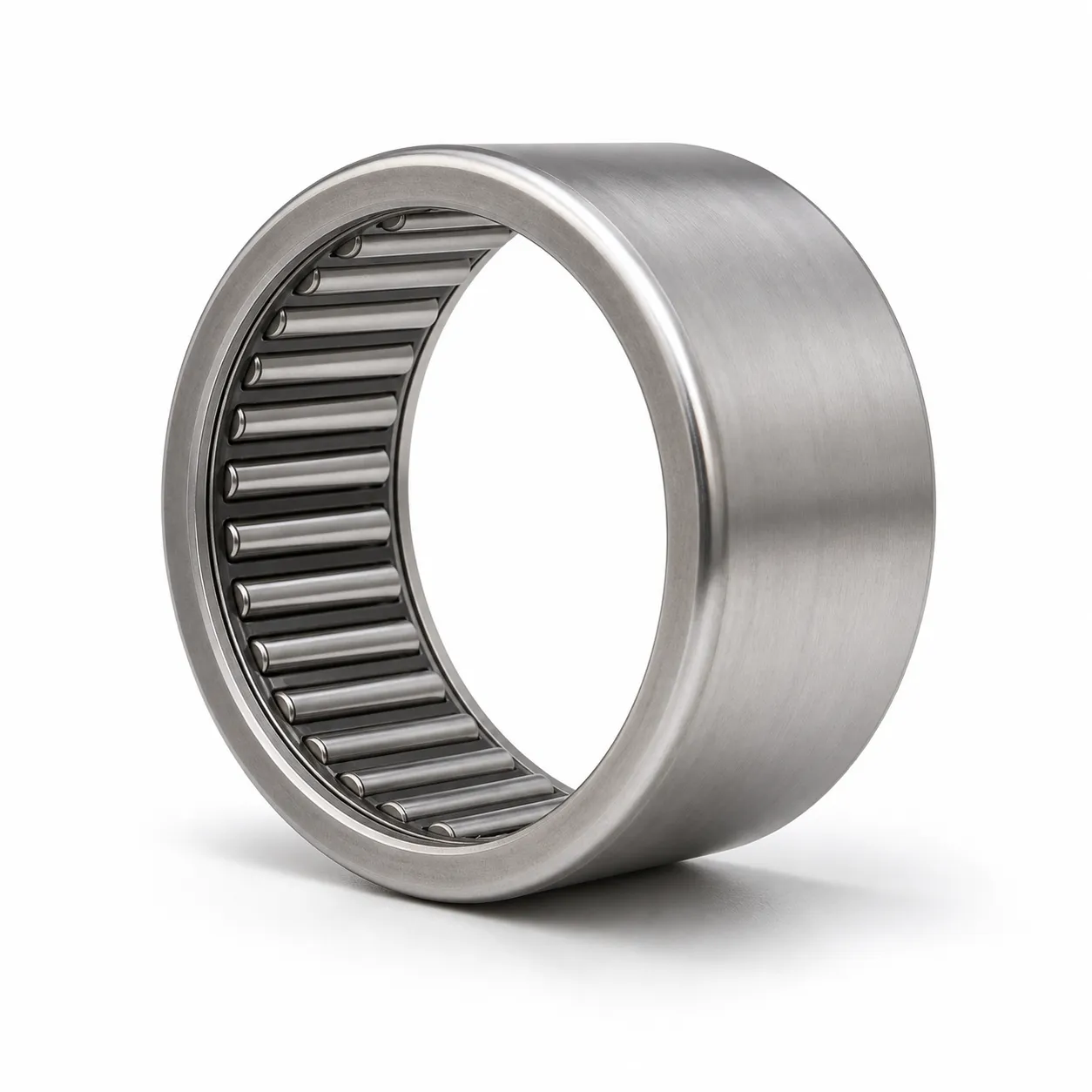
Needle Roller Bearing
Compact bearings with very long, thin rolling elements providing high radial load capacity in minimal radial space, ideal for space-constrained applications.