
Products
Roller Bearings
Tapered, spherical, cylindrical, and needle roller bearings for heavy radial and axial load applications.
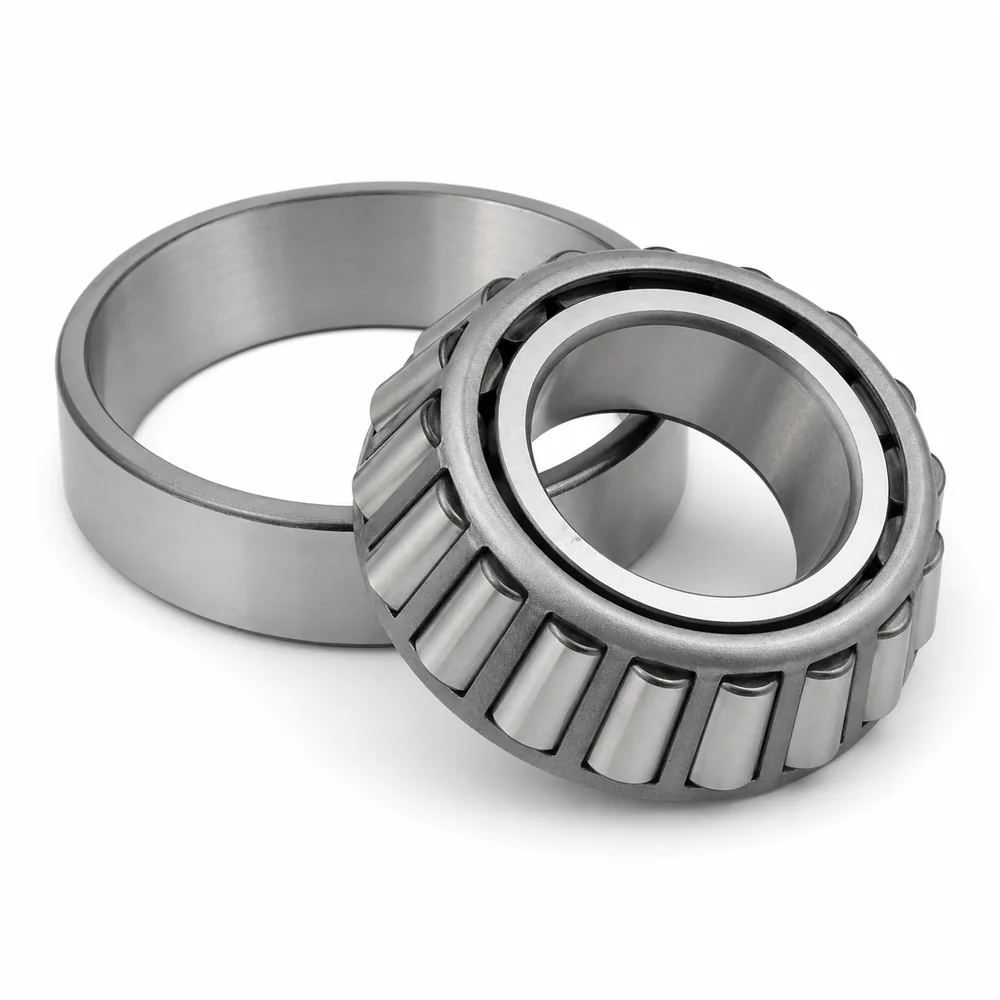
Tapered Roller Bearing
Designed to handle combined radial and axial loads with tapered raceways for heavy-duty applications.
- Bore Diameter
- 15 mm - 300 mm
- Dynamic Load Rating
- 14 kN - 1,700 kN
- Precision Class
- P5 standard, P4/P2 available
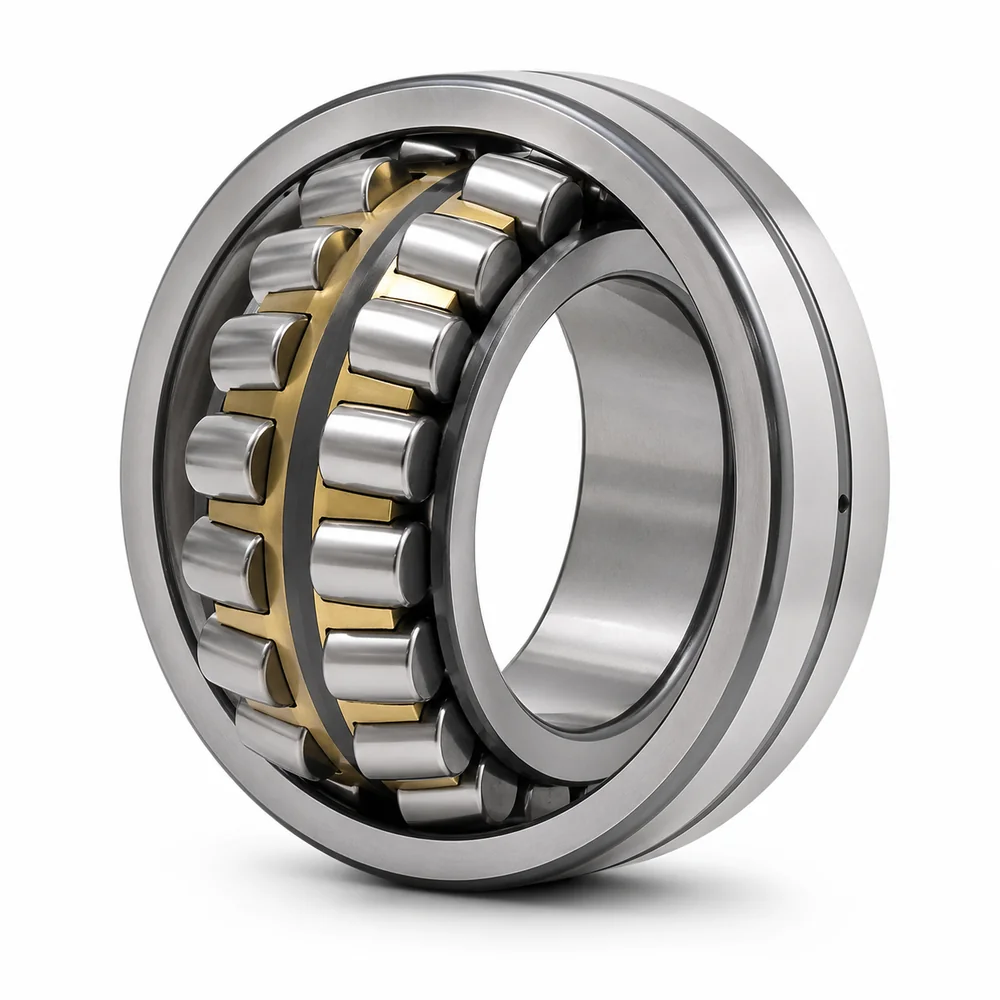
Spherical Roller Bearing
Self-aligning double-row bearings with barrel-shaped rollers for heavy radial loads, shock resistance, and up to 2° misalignment compensation in mining, steel, and energy applications.
- Bore Diameter
- 20 mm - 400 mm
- Dynamic Load Rating
- 25 kN - 2,500 kN
- Precision Class
- P5 / P4 available
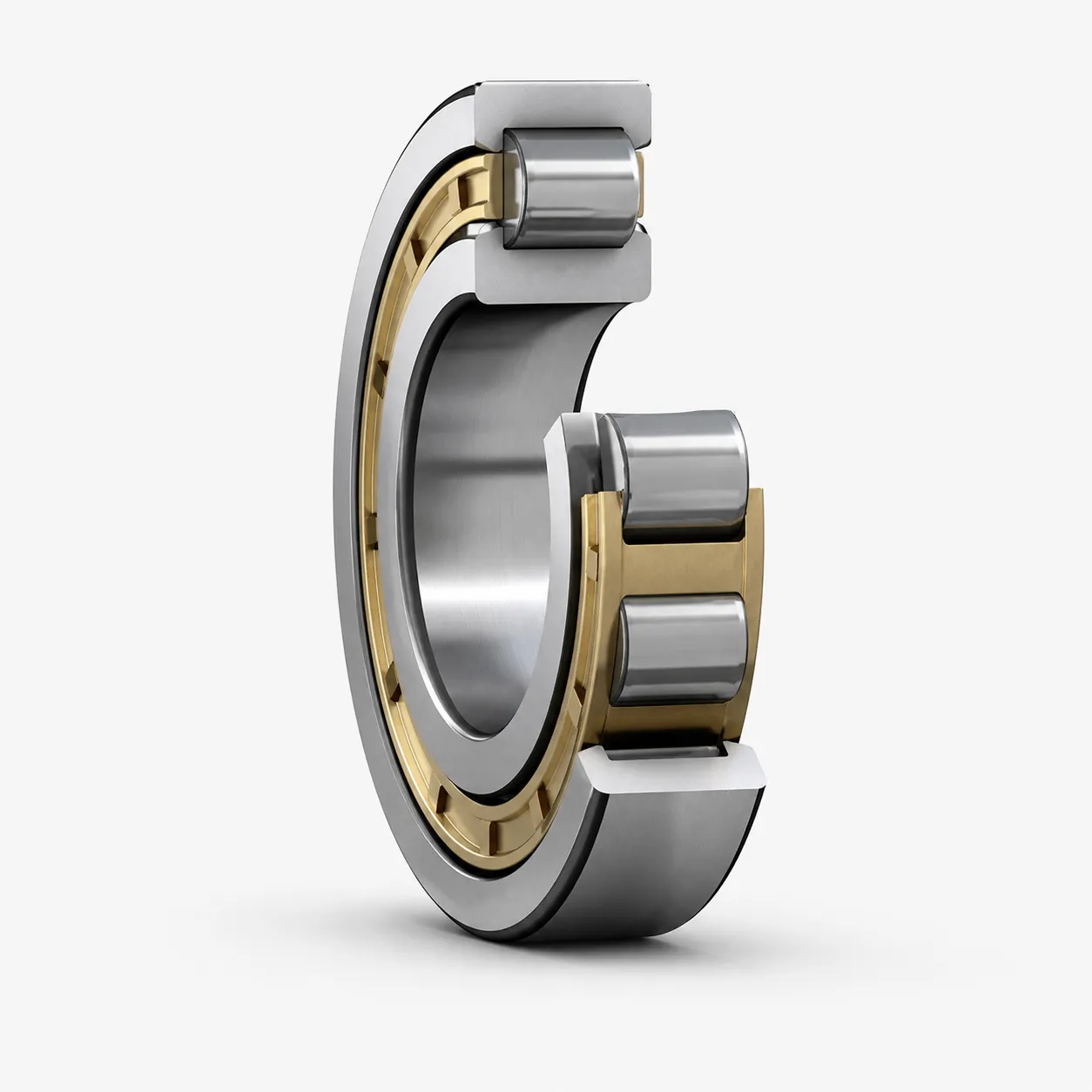
Cylindrical Roller Bearing
High radial load capacity bearings using line contact between rollers and raceways for optimised stress distribution in industrial machinery.
- Bore Diameter
- 20 mm - 500 mm (standard range)
- Dynamic Load Rating
- 30 kN - 2,500 kN
- Precision Class
- P5 standard, P4/P2 on request
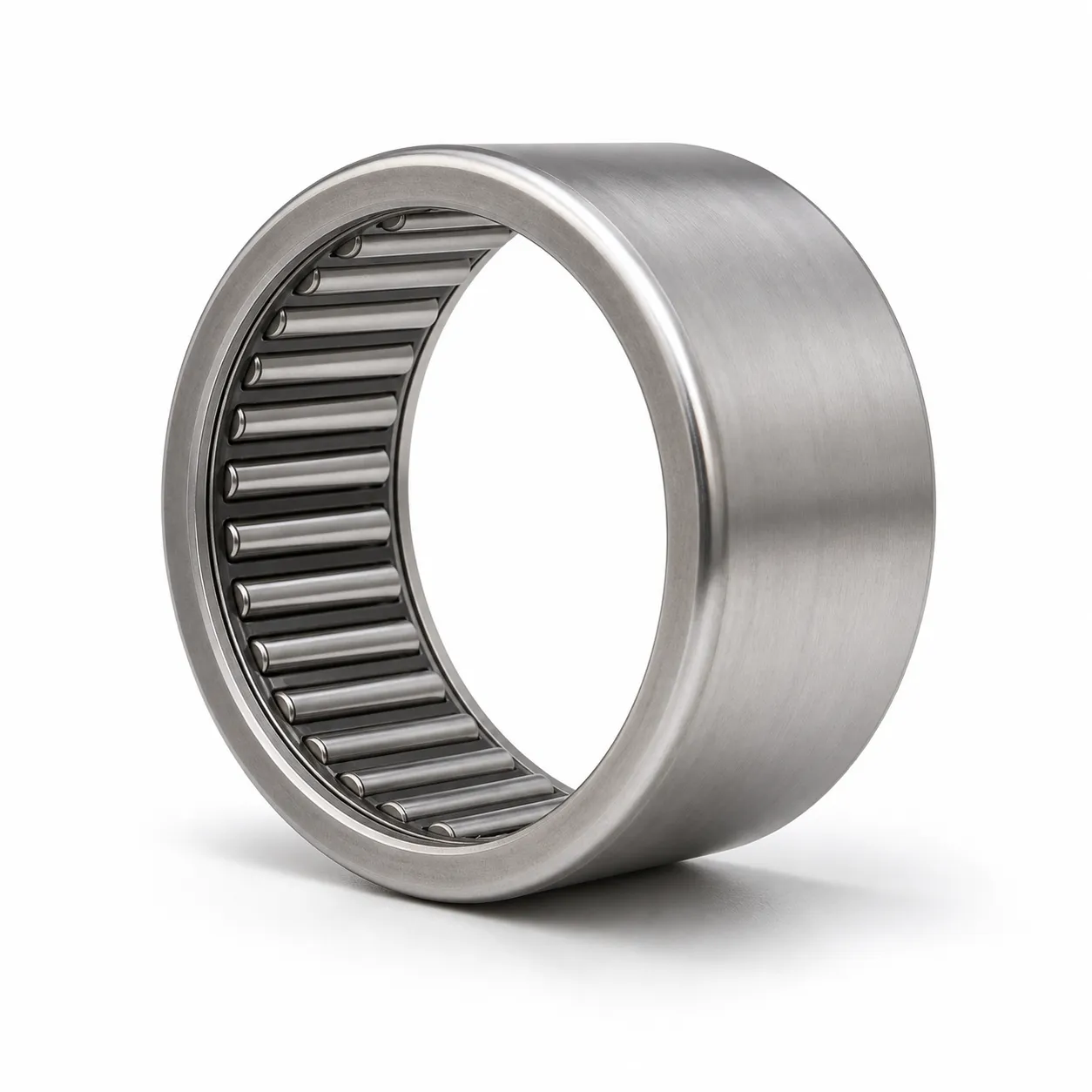
Needle Roller Bearing
Compact bearings with very long, thin rolling elements providing high radial load capacity in minimal radial space, ideal for space-constrained applications.
- Bore Diameter
- 5 mm - 150 mm (standard range)
- Dynamic Load Rating
- 5 kN - 300 kN
- Precision Class
- P5 standard, P4 on request
Key Takeaways
- 4 roller bearing types: tapered, spherical, cylindrical, and needle
- Higher load capacity than ball bearings of the same size due to line contact
- Bore diameters from 15 mm to 400 mm for heavy industrial applications
- Spherical designs accommodate up to 2° of shaft misalignment
- Operating range from −40 °C to +150 °C — ISO 355, ISO 15:2017, and ISO 492 certified
Technical Overview
Roller bearings are characterised by line contact between the rolling elements and the raceways. This type of contact means that roller bearings have a higher load rating than ball bearings of the same size; however the speed capability is lower than a ball bearing due to the increased friction of a contact line. ANDE offers a comprehensive selection of roller bearings engineered for the most demanding heavy industrial environments including steel mills, mining operations, power generation facilities, and large-scale manufacturing plants. Our roller bearing product line includes tapered roller bearings for combined load applications, spherical roller bearings with self-aligning capability for installations with shaft deflection or misalignment, cylindrical roller bearings for high radial load capacity, and needle roller bearings for space-constrained designs requiring high radial loads. All roller bearings are manufactured from high-quality bearing steel with precision-machined raceways, heat-treated components, and carefully selected cage designs for optimal performance and durability under extreme operating conditions.
Key Features
- Superior load capacity compared to ball bearings of equivalent size
- Tapered, spherical, cylindrical, and needle roller configurations available
- Self-aligning designs accommodate up to 2 degrees of misalignment
- Bore diameter range from 15mm to 400mm for diverse applications
- Operating temperature range from -40°C to +150°C
- Manufactured to ISO 355, ISO 15:2017, and ISO 492 standards
Frequently Asked Questions
What is the difference between tapered and cylindrical roller bearings?
Cylindrical roller bearings support very high radial loads but limited axial loads. Tapered roller bearings have conical rollers arranged at an angle, enabling them to handle combined radial and axial loads simultaneously. Tapered bearings are typically used in pairs (face-to-face or back-to-back) in gearboxes, wheel hubs, and rolling mill chocks.
When should I use a spherical roller bearing?
Spherical roller bearings are the best choice when shaft deflection, housing misalignment, or mounting errors are expected. They accommodate up to 2° of misalignment while supporting heavy radial loads and moderate axial loads. Common applications include conveyor pulleys, vibrating screens, fans, and paper mill dryer sections.
What are needle roller bearings used for?
Needle roller bearings have a very small cross-section relative to their load capacity, making them ideal for space-constrained designs. They are widely used in automotive transmissions, rocker arms, compressor connecting rods, and textile machinery where radial space is limited but high radial load capacity is needed.
How do roller bearings compare to ball bearings in load capacity?
Roller bearings have significantly higher load capacity than ball bearings of equivalent size because rollers make line contact with the raceways instead of point contact. However, ball bearings can operate at higher speeds with less friction. Choose roller bearings for heavy loads and lower speeds; ball bearings for high speeds and lighter loads.
What operating temperatures can ANDE roller bearings withstand?
Standard ANDE roller bearings operate from −40 °C to +150 °C. For higher temperatures, special heat-stabilised versions (S1 up to +200 °C, S2 up to +250 °C) are available with adjusted internal clearance. Contact ANDE engineering for applications exceeding standard temperature ranges.
Related Articles
Dynamic Load vs Static Load in Bearings (C vs C₀)
Dynamic rating C governs L₁₀ fatigue life under rotation (ISO 281). Static rating C₀ bounds permanent deformation per ISO 76. Below 10 rpm, C₀ governs.
2026-05-02Different Kinds of Bearings: A Complete Guide
Eleven bearing categories explained, from deep-groove balls (the world's most-produced bearing type) to magnetic levitation. How each works and where it fits.
2026-04-29Spherical Roller Bearings: Misalignment Solutions
Spherical roller bearings self-align under load to absorb shaft deflection in crushers, mills, and wind turbines, where rigid bearings fail from edge loading.
2026-04-25Four-Row Tapered vs. Cylindrical Bearings for Roll Necks
Roughing stands take tapered; finishing stands take cylindrical. Match wrong and a hot strip mill loses thousands per hour. Selection guide from ANDE Bearing.
2026-02-22How to Source Chinese Bearings: An Overseas Buyer's Guide
Chinese manufacturers hold a quarter of the global bearing market. A spec-first process for qualifying suppliers, setting AQL inspection limits, and costing a bearing landed.
Send Drawing / Model / Operating Conditions → Quote Within 24 Hours
Our engineering team reviews your specifications and provides a detailed quotation with bearing selection recommendations.
Other Categories
Need this bearing for your application?
Our engineering team can help with bearing selection, custom specifications, and volume pricing.