Noise and vibration are the top two reasons a bearing comes out of a machine. Of the bearings SKF logs in its damage-analysis database, excessive vibration accounted for 32% of removals and excessive noise a further 23%. Removal for maintenance followed at 12%, temperature at 11% and seizure at 9% (SKF Evolution, fig. 2). More than half of all removals start with a symptom an operator can hear or feel.
That puts two very different problems on an engineer's desk. One is diagnostic: a machine is loud and you have to decide whether the bearing is the source before you pull it. The other is contractual: you are writing a specification and "low noise" is not a requirement anyone can hold a supplier to. This guide covers both. It starts with how bearing noise is actually measured, which is not with a microphone. Then: what each measured band tells you, which standard defines the limit, and the lines to put on a purchase order.
One note on scope. This is written for design, procurement, and reliability engineers specifying or troubleshooting rolling bearings. If you arrived here about a humming wheel on a car, the relevant background is in our guide to automotive ball bearings.
Key Takeaways
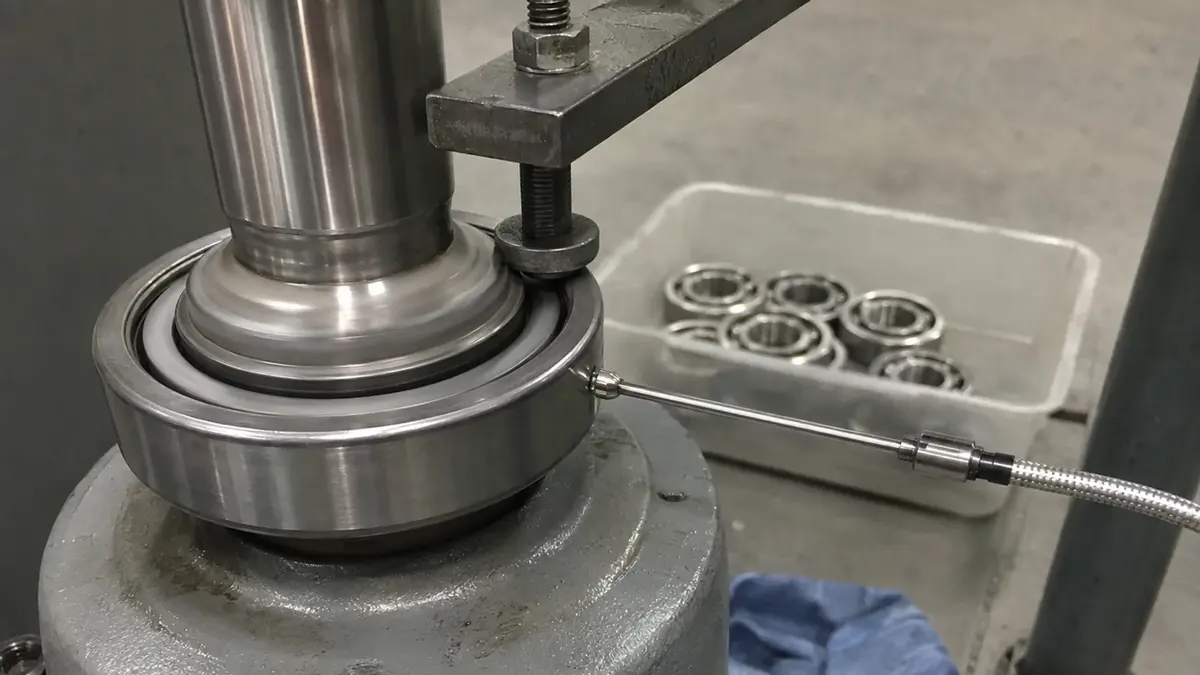
- Bearing noise is measured as vibration velocity on a spindle rig, not as sound pressure in a room. The inner ring turns at 1,800 rpm, the stationary outer ring is preloaded, and a velocity sensor reads the signal off the ring itself (MinebeaMitsumi).
- The signal is split into three bands: L from 50 to 300 Hz, M from 300 to 1,800 Hz, and H from 1,800 to 10,000 Hz. The band that fails narrows the search to a defect scale.
- ISO 15242 tells you how to measure, not what passes. Parts 1 to 4 define the method and calibration. A datasheet line reading "ISO 15242" is a statement about procedure only.
- The acceptance limits are a separate document. For deep groove ball bearings, GB/T 32325 defines group V as the basic requirement and then V1, V2, V3, V4, plus VF3 and VF4 for the tightest duty.
- Precision class is not a noise specification. ISO 492 and the ABEC scale rate dimensional tolerance. Clearance group, precision class, and vibration group are three independent things you have to call out separately.
- Prove it is the bearing first. SKF states that electric motor noise "is not necessarily caused by bearings" (SKF). Cage, lubricant, clearance, and mounting geometry set the noise floor before the bearing does.
How Bearing Noise Is Actually Measured
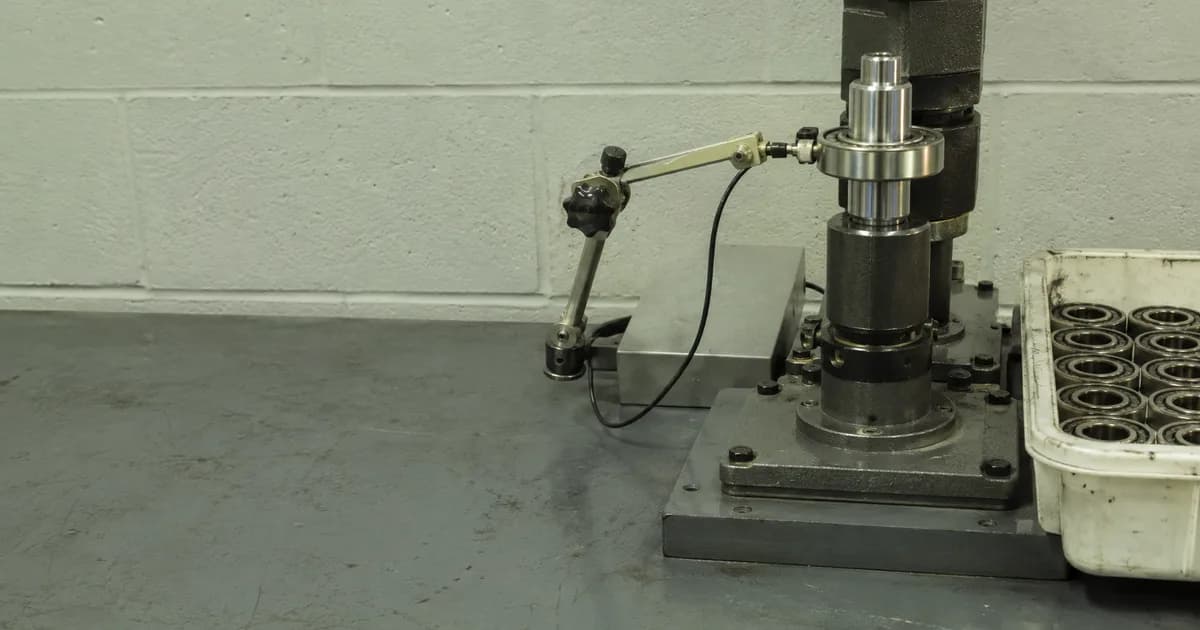
Bearing noise is quantified as vibration velocity measured on the bearing ring, not as a sound level in the air. The bearing is mounted on a precision spindle that turns the inner ring at 1,800 rpm, and a preload is applied to the stationary outer ring. A velocity sensor contacts the outer circumference, so the vibration transmitted to the ring is converted directly to an electrical signal (MinebeaMitsumi).
The reason for that arrangement is isolation. A decibel reading in a room measures the machine, the mounting, and the acoustics of the building along with the bearing. Reading velocity off the ring, on a high-precision spindle, strips those contributions out and leaves a number that belongs to the part. It is why a bearing can pass a bench test and still sit in a loud machine. It is also why a bench figure is the only noise number that can sensibly appear on a purchase order.
The instrument that does this is generally called an Anderon meter, and its output is expressed in Anderons, a unit used specifically for bearing vibration (MinebeaMitsumi). The measuring method itself, along with calibration and the definitions behind it, is specified in ISO 15242-1.
The Three Frequency Bands and What Each One Tells You
The measured signal is not reported as a single figure. It is split into three frequency bands, and each is evaluated separately (MinebeaMitsumi):
The reason the split is useful is that frequency scales inversely with the size of the feature producing it. At a fixed speed, a long-wavelength deviation in the raceway, such as ring form or low-order waviness, passes under the rolling elements slowly and shows up low in the spectrum. A short-wavelength feature, such as surface roughness or a small contamination dent, produces impacts far more often and lands high. So a failure confined to the H band points you at surface finish, cleanliness, and particle contamination, while an L band failure points at geometry, form, and how the bearing is held.
Treat that mapping as engineering interpretation rather than a clause in a standard. The band boundaries themselves are fixed and published; what each band implies about the cause is inference that you should confirm against the part.
ISO 15242 Defines the Method, Not the Limit
Almost nothing written about bearing noise says this, and it is the most useful thing on the topic: ISO 15242 specifies measuring methods and calibration, not a pass or fail level. Part 1 covers the fundamentals of measuring vibration of rotating rolling bearings under established measuring conditions, together with calibration. The remaining parts extend the method to specific bearing types.
| Part | Edition | Scope |
|---|---|---|
| ISO 15242-1 | 2015 | Fundamentals: measuring conditions and calibration |
| ISO 15242-2 | 2015 | Radial ball bearings with cylindrical bore and outside surface |
| ISO 15242-3 | 2017 | Radial spherical and tapered roller bearings with cylindrical bore and outside surface |
| ISO 15242-4 | 2017 | Radial cylindrical roller bearings with cylindrical bore and outside surface |
The practical consequence is that a supplier can truthfully claim conformance to ISO 15242 while telling you nothing about whether the bearing is quiet. Conformance means the measurement was taken correctly. Whether the resulting number is acceptable depends on a limit that lives somewhere else, in a product specification or in your own drawing.
A usable noise requirement always names two documents: one for the method, one for the limit. Quote a method standard alone and you have specified a procedure with no acceptance criterion. Quote a limit alone and there is no agreed way to obtain the number it is compared against.
The Vibration Groups You Can Put on a Purchase Order
For deep groove ball bearings, the acceptance limits sit in GB/T 32325-2015, which specifies the technical requirements, measurement methods, evaluation methods, and inspection rules for bearing vibration velocity. It defines a group ladder, and the group is the thing you write on the order.
Group V is the basic vibration requirement for a general bearing. Groups V1, V2, V3 and V4 apply to bearings with progressively higher vibration requirements, and VF3 and VF4 cover the tightest duty. The standard draws its measuring method from GB/T 24610.1 and GB/T 24610.2, which is the method/limit division described above, made explicit inside the document itself.
The scope limits matter as much as the groups, because a specification that ignores them fails silently:
The standard applies to deep groove ball bearings in diameter series 0, 2 and 3. The nominal outside diameter must run over 10 mm up to 200 mm, with boundary dimensions conforming to GB/T 276. VF3 and VF4 are available only from over 10 mm up to 100 mm outside diameter. Specify VF4 on a 150 mm outside diameter bearing and you have written a requirement the standard does not cover.
This is also where a widespread piece of folklore needs correcting. Supplier quotations and parts listings circulate a "Z1/Z2/Z3" noise ladder paired with "V1/V2/V3", and buyers repeat shorthand like "Z2V2" without a document behind it. The groups the current specification actually defines are V, V1, V2, V3, V4, VF3 and VF4. If a quotation offers a Z grade, ask which standard and which edition defines it, then ask for the bench report against that group. Our guide to sourcing bearings from Chinese manufacturers covers how to get that evidence attached to an order rather than promised on a phone call.
One deliberate omission: the numeric velocity limits for each group are normative content inside GB/T 32325 and are not reproduced here. Values circulating on parts-reseller pages are not traceable to the standard, and publishing them second-hand would be exactly the kind of unsourced number this site exists to avoid. Buy the standard, or ask your supplier to quote the limit table with the edition reference.
The GB/T to ISO Crosswalk
The Chinese measuring-method standard is the same method, part for part. GB/T 24610 carries four parts whose titles are identical to the four parts of ISO 15242. Part 1 covers fundamentals, Part 2 radial ball bearings with cylindrical bore and outside surface, Part 3 radial spherical and tapered roller bearings, and Part 4 radial cylindrical roller bearings. GB/T 24610.1-2019 is current, issued in October 2019 and effective from 1 May 2020, superseding the 2009 edition.
| Measuring method | Chinese national standard | Scope |
|---|---|---|
| ISO 15242-1 | GB/T 24610.1 | Fundamentals |
| ISO 15242-2 | GB/T 24610.2 | Radial ball bearings, cylindrical bore and outside surface |
| ISO 15242-3 | GB/T 24610.3 | Radial spherical and tapered roller bearings |
| ISO 15242-4 | GB/T 24610.4 | Radial cylindrical roller bearings |
A vibration figure measured to GB/T 24610 and one measured to ISO 15242 describe the same quantity by the same procedure. So the question that separates a quiet bearing from a noisy one is never where it was made. It is which acceptance group was specified, which edition of which standard defines that group, and whether the bench report exists. Ask for the group and the report.
What Each Noise Sounds Like, and What Causes It
The manufacturers classify bearing sounds into named types, and the name maps to a mechanism. NSK's Bearing Doctor is built on that idea, pairing sound clips of characteristic damage with countermeasures for race noise, cage noise, contaminant noise and others (NSK).
| Sound | Character | Likely mechanism | First countermeasure |
|---|---|---|---|
| Race noise | Continuous, smooth hum that rises with speed | Raceway waviness and surface finish, inherent to the bearing | Tighter vibration group; check the bench report |
| Contaminant noise | Irregular clicking or crackling, not periodic | Particles in the lubricant denting or riding the raceway | Cleanliness at assembly, sealing, filtration |
| Ball or raceway flaw noise | Regular, periodic tick locked to speed | A discrete spall or dent on one surface | Replace; investigate the damage mode |
| Cage noise | Rattle or intermittent chatter, load dependent | Cage pocket clearance and cage motion, often lubricant related | Cage type and lubricant selection |
| Squeal | High-pitched, often only when cold | Lubricant film breakdown, low-temperature grease behavior | Grease selection for the temperature range |
| Roller clicking | Clicking at low speed in roller types | Rollers entering the load zone under light load | Preload or minimum load review |
Race noise, cage noise and contaminant noise are NSK's named categories. The remaining rows use the common shop-floor descriptions for the same diagnostic families, and the mechanisms and countermeasures are engineering summary.
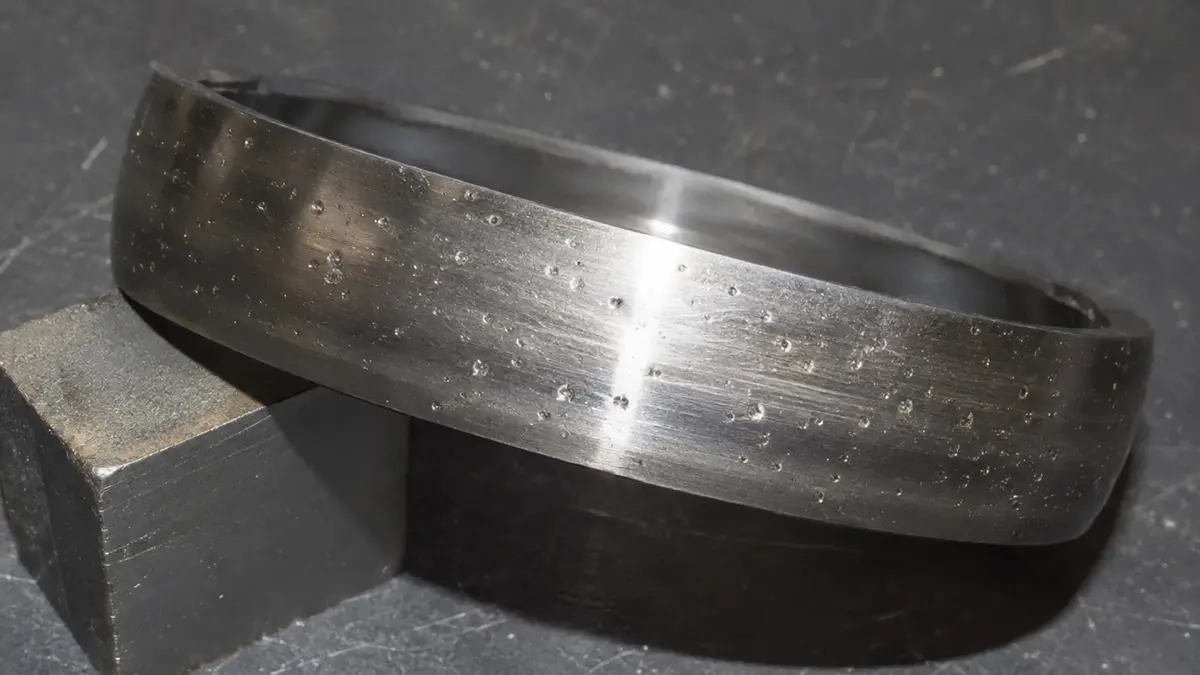
Two causes deserve naming separately because they are frequently misattributed to bearing quality.
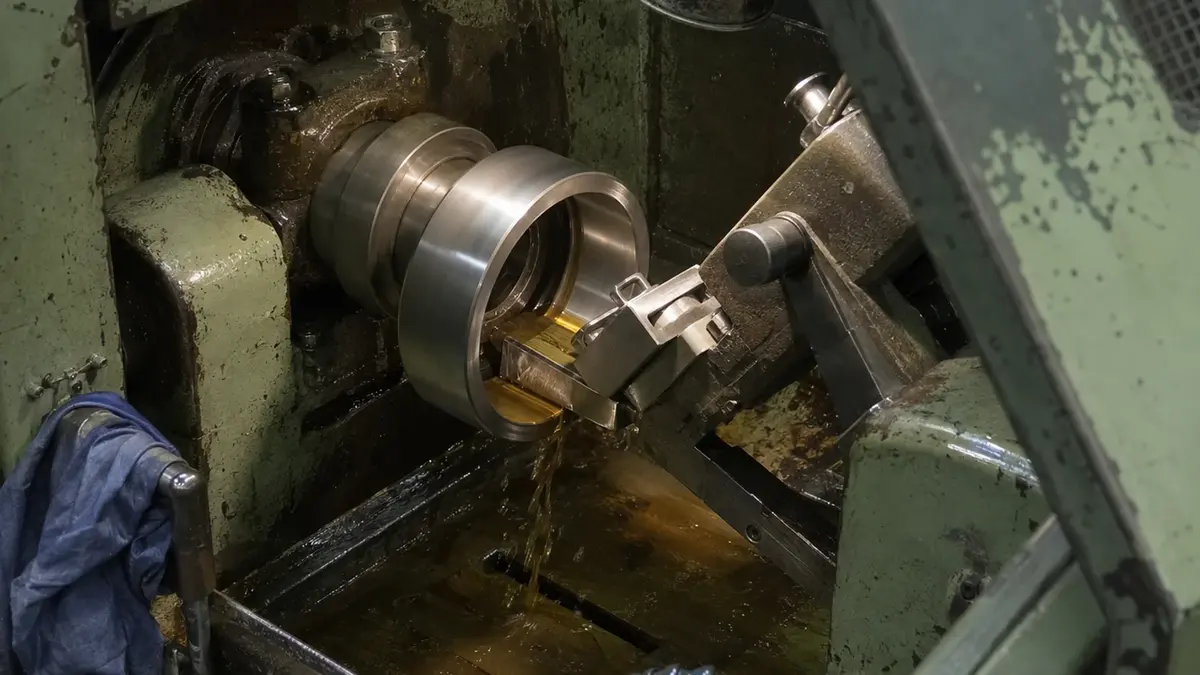
Raceway geometry is where race noise comes from. The continuous hum of a healthy bearing is a product of ring form, waviness, and surface finish, which are set by grinding and superfinishing. That is why race noise is a manufacturing-process property, and why the only meaningful lever a buyer has over it is the vibration group specified at purchase.
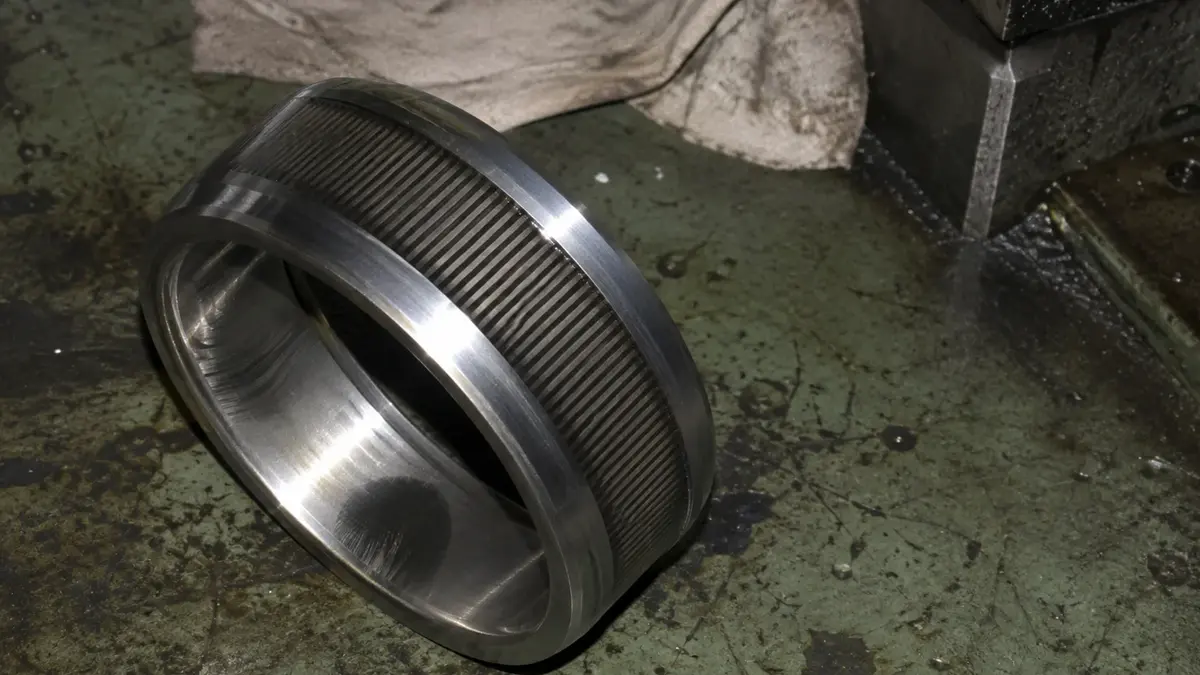
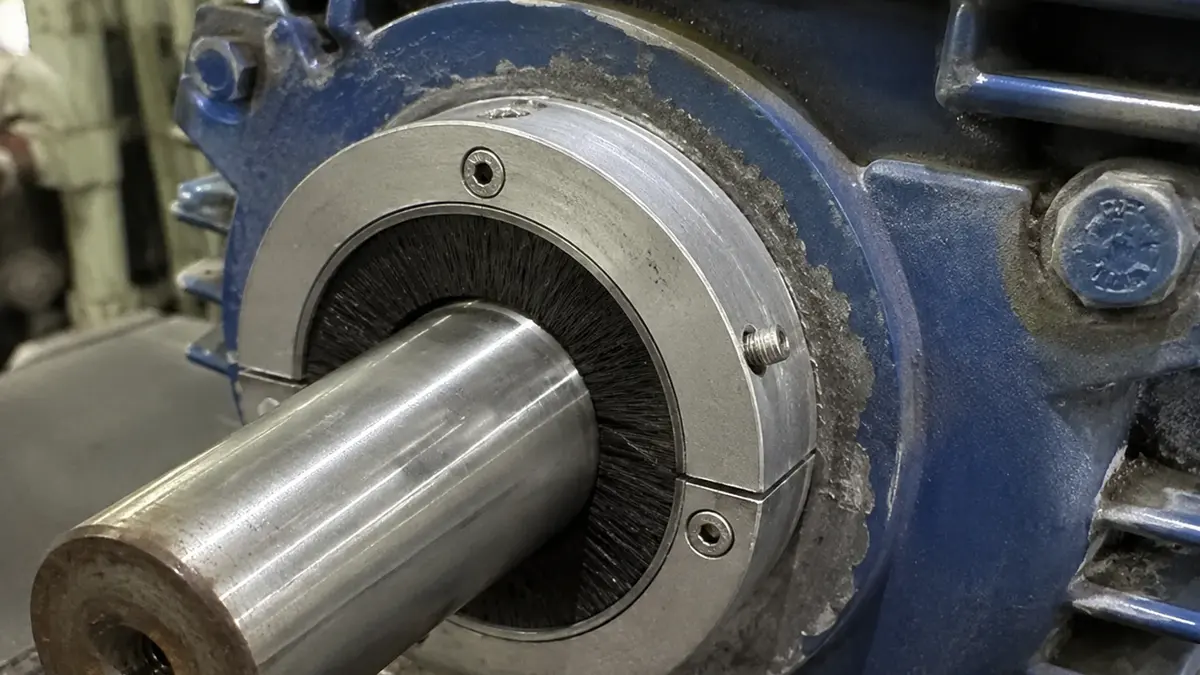
Electrical erosion is a noise source that a new bearing will not fix. On inverter-driven motors, shaft voltage can discharge through the lubricant film and machine the raceway, progressing to the parallel washboard pattern known as fluting. The result is rising noise and vibration from a part that was quiet when installed. ISO 15243:2017 classifies electrical erosion as its own damage mode. The low-intensity case, current leakage erosion (ISO 5.4.3), is common in motors run from a variable frequency drive whose shaft is not properly grounded (SKF Evolution). If the current path is not corrected, every replacement bearing follows the first.
For the full damage taxonomy behind each of these, see our guide to bearing failure analysis. It walks the six ISO 15243 modes with their clause numbers, plus the four-stage vibration progression used in condition monitoring.
Prove It Is the Bearing Before You Replace It
Run an elimination sequence before you pull anything. SKF is unusually direct about this: electric motor noise "is not necessarily caused by bearings" (SKF). The company treats noise as a system property. It is set by cage material, lubricant, and internal clearance, plus the shaft, housing, and cover tolerances that limit misalignment.
Two of those branches are worth expanding. Resonance is a system effect that no bearing group will cure on its own. SKF developed its Quiet Running deep groove ball bearings specifically to prevent resonance between the rotor, stator, and bearings in generators. The design minimizes structural resonance rather than just trimming the part's own emission (SKF). If the noise sharpens at one speed and vanishes either side of it, you are looking at resonance.
A repeat failure is diagnostic. If a new bearing goes noisy the same way the last one did, the bearing was almost certainly never the cause. Look at the current path, the fits, and the alignment.
How to Specify a Quiet Bearing
A usable low-noise requirement names four things, and "low noise" is not one of them. Work through each lever in turn.
1. Vibration group and the specification that defines it. This is the only clause that makes the requirement testable. Name the group, the standard and edition that defines it, and the measuring-method standard.
2. Internal clearance. Excess operating clearance widens the unloaded zone and raises vibration and noise, while negative clearance drives preload and heat. Clearance is also one of the three levers SKF names for motor noise. Our guide to bearing internal clearance works through how fit and temperature move the operating value, and where the CM motor clearance band fits.
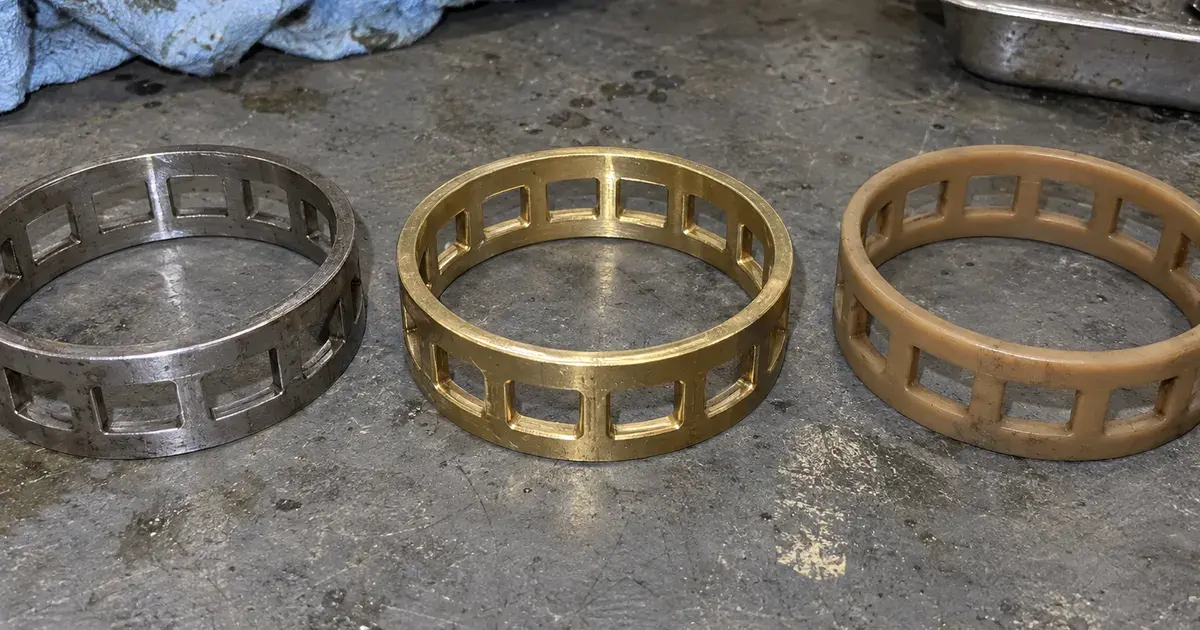
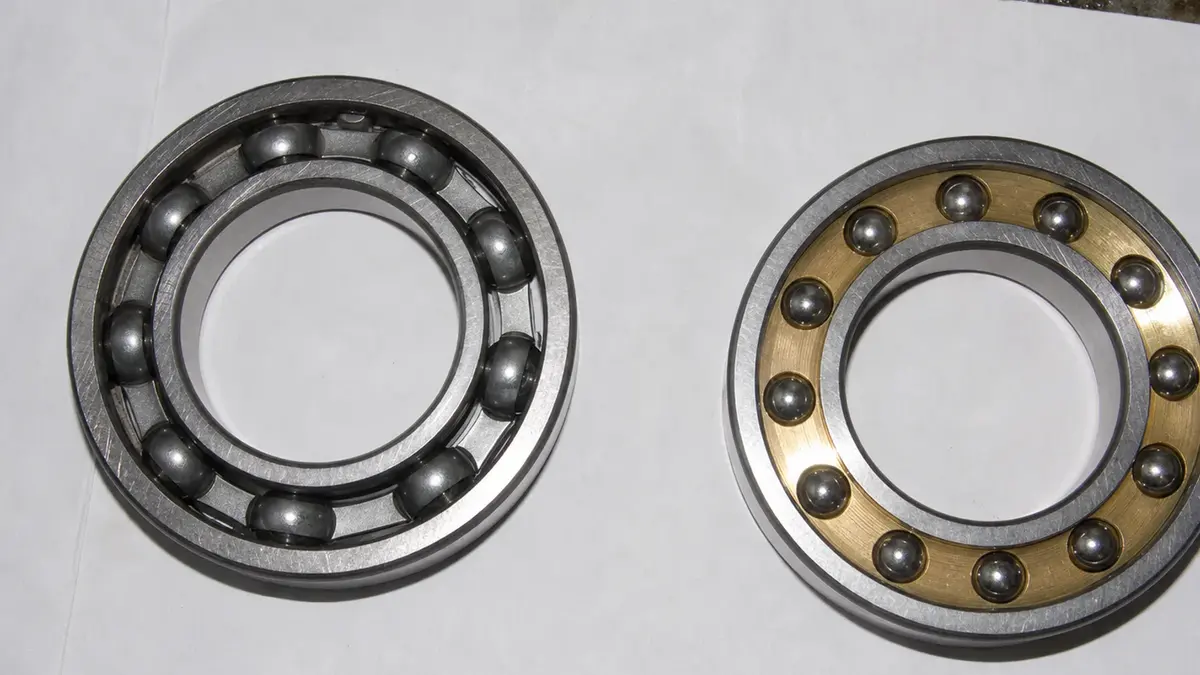
3. Cage. SKF offers its Quiet Running bearings with pressed steel or machined brass cages, and they remain fully interchangeable with standard deep groove ball bearings (SKF). Cage choice is therefore a specification change, not a redesign. Our guide to bearing cages covers the material temperature ceilings and the guidance types behind that choice.
4. Lubricant. Low-noise greases are qualified on dedicated rigs. Klüber markets Klüberquiet BQ 72-72 as a low-noise rolling bearing grease for electric motors and fans, with low-noise behavior demonstrated on test rigs such as SKF BeQuiet+ (Klüber). If noise matters, the grease is specified by name and not left to the supplier's default fill. Our guide to bearing lubrication covers the film and temperature side, and sealed vs shielded bearings covers how the closure choice interacts with grease retention.
What does not belong on the list is precision class. ISO 492 and the ABEC scale rate dimensional tolerance and running accuracy, not noise. Tighter tolerances do reduce some geometric error, but there is no noise requirement anywhere in the tolerance standard, which is why a high ABEC grade is not a noise specification. Our guide to the ABEC bearing rating sets out what the scale does and does not control. The same trap catches buyers of miniature bearings, where play, torque, and noise all have to be called out separately.
Put together, the purchase order lines look like this:
BEARING NOISE / VIBRATION REQUIREMENT

1. Vibration group      : GB/T 32325-2015, group V3
                          (confirm part is within scope: diameter series 0/2/3,
                           OD over 10 up to 200 mm; VF3/VF4 only to OD 100 mm)
2. Measuring method     : GB/T 24610.2 / ISO 15242-2, report L, M and H bands
3. Evidence required    : bench report per lot, traceable to lot number
4. Internal clearance   : specify group (e.g. CN, C3, or CM for motor duty)
5. Cage                 : specify type (pressed steel / machined brass / polyamide)
6. Lubricant            : specify grease by name and fill quantity
7. Application note     : state speed, load, temperature and mounting fits
                          so the supplier can flag a mismatch
Line 3 is the one buyers most often leave out, and it is the one that converts the specification from a wish into an inspection.
Frequently Asked Questions
Q: What causes bearing noise?
Six mechanisms cover almost all of it. Raceway waviness and surface finish produce the continuous hum called race noise. Particle contamination produces irregular clicking. A discrete spall or dent produces a periodic tick. Cage motion produces rattle. Lubricant film breakdown produces squeal, often only when cold. On inverter-driven motors, electrical discharge through the lubricant film erodes the raceway and raises noise over time. Excess or negative internal clearance and misalignment amplify several of these.
Q: How is bearing noise measured?
As vibration velocity on the bearing ring, not as sound pressure in the air. The inner ring is mounted on a precision spindle and turned at 1,800 rpm, preload is applied to the stationary outer ring, and a velocity sensor contacts the outer circumference. The signal is split into three bands and evaluated separately. The method is specified in ISO 15242, or equivalently in GB/T 24610.
Q: What does an Anderon meter measure?
Bearing vibration, expressed in Anderons, a unit used specifically for the vibration of a rotating bearing. Readings are reported per band: L from 50 to 300 Hz, M from 300 to 1,800 Hz, and H from 1,800 to 10,000 Hz. Because the inner ring is driven by a high-precision spindle and the signal is taken directly off the outer ring, small vibrations can be detected without external influences (MinebeaMitsumi).
Q: What do the Z and V noise ratings on a bearing mean?
The V groups are real and defined. GB/T 32325-2015 sets group V as the basic vibration requirement for deep groove ball bearings. V1, V2, V3 and V4 cover higher requirements, and VF3 and VF4 the tightest, the latter two only up to a 100 mm outside diameter. The "Z" ladder that circulates in supplier quotations is shorthand rather than a designation from the current specification. Ask which standard and edition defines any grade you are quoted, then ask for the bench report.
Q: Does a higher ABEC or ISO 492 precision class mean a quieter bearing?
No. Those standards rate dimensional tolerance and running accuracy, and contain no noise or vibration requirement. Precision class, internal clearance group, and vibration group are three independent specifications. A bearing can hold tight tolerances and still fail a vibration group, so noise has to be specified on its own line.
Q: The machine is loud. How do I tell whether it is the bearing?
Work down the elimination sequence. If the tone does not track shaft speed, look at the structure or the drive. If it disappears when the machine is uncoupled, look at the coupling and alignment. If a grease change alters it, or it appears only from cold, look at the lubricant. If the drive is an inverter and a second bearing has failed the same way, measure shaft voltage. If the fits and cover geometry are out of tolerance, look at mounting. SKF's own guidance is that motor noise is not necessarily caused by bearings, so the bearing should be the last candidate rather than the first.
Conclusion
Bearing noise is a specification problem more often than a quality problem. The discipline comes down to a few points:
- Noise is measured as banded vibration velocity on the ring, at 1,800 rpm, and not in decibels. The bands are 50 to 300, 300 to 1,800, and 1,800 to 10,000 Hz.
- ISO 15242 and GB/T 24610 define the method. Neither defines a limit, so a conformance claim on its own is not a noise requirement.
- The limit is a group. For deep groove ball bearings that ladder is V, V1 to V4, VF3 and VF4, per GB/T 32325, within a defined outside-diameter scope.
- Precision class is not a noise specification. Group, clearance, cage, and grease are the levers, and each needs its own line on the order.
- Prove the bearing is the source before replacing it, especially on inverter drives, where a repeat failure points at the current path rather than the part.
If you are specifying a bearing where noise is a requirement, send the application data to ANDE Bearing's engineering team. We will return the recommended vibration group for your speed, load, and mounting case, plus the bench report format we supply against it. You can also start from the size you need in our deep groove ball bearings. Our guide to reading a bearing number shows how clearance and special-execution suffixes appear on the ring.
About the Author
Jeff Li writes on bearing engineering and global sourcing for ANDE Bearing. He works directly with OEM and aftermarket buyers in automotive, heavy industry, and renewable energy. Connect on LinkedIn.